
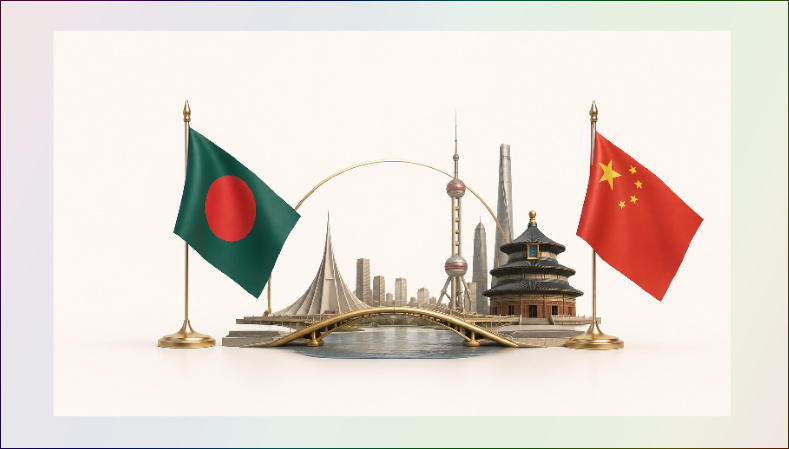
The first official visit of Bangladesh’s Foreign Minister Khalilur Rahman to China comes at a moment of recalibration in Dhaka’s external engagement, reflecting a careful effort to balance continuity with evolving geopolitical and economic priorities. The May 5–7 visit, undertaken at the invitation of Wang Yi, underscores both countries’ intent to reinforce an already robust partnership while exploring new avenues of cooperation.
At its core, the visit is less ceremonial and more strategic. With Bangladesh navigating a complex global landscape marked by shifting supply chains, geopolitical competition, and economic headwinds, strengthening ties with China remains a pragmatic choice. Beijing continues to be a major development partner, particularly in infrastructure, trade, and investment—areas central to Dhaka’s growth ambitions.
The anticipated discussions on aligning development strategies signal a deeper layer of engagement. Bangladesh’s push for economic diversification and post-LDC graduation resilience aligns with China’s interest in advancing high-quality Belt and Road cooperation. This suggests a potential shift from purely project-based collaboration toward more integrated economic planning, where connectivity, industrial capacity, and technology transfer play larger roles.
Equally significant is the emphasis on political trust and high-level exchanges. Meetings with senior Chinese leadership, including Wang Huning, indicate Beijing’s willingness to engage Bangladesh beyond transactional ties, reinforcing a long-term strategic outlook. This comes as China seeks to consolidate partnerships in South Asia amid intensifying regional competition.
However, the visit also carries broader geopolitical implications. Bangladesh’s engagement with China will be closely watched by other partners, particularly as Dhaka maintains a policy of strategic balance among major powers. Discussions on regional and global developments—including the Middle East—highlight Bangladesh’s growing diplomatic footprint and its effort to position itself as a constructive player in international affairs.
Ultimately, Khalilur Rahman’s visit reflects continuity in Bangladesh-China relations, but with a nuanced shift toward strategic alignment and diversified cooperation. The outcomes will likely shape not only bilateral ties but also Dhaka’s broader foreign policy trajectory in an increasingly multipolar world.