Special Correspondent, Dhaka:
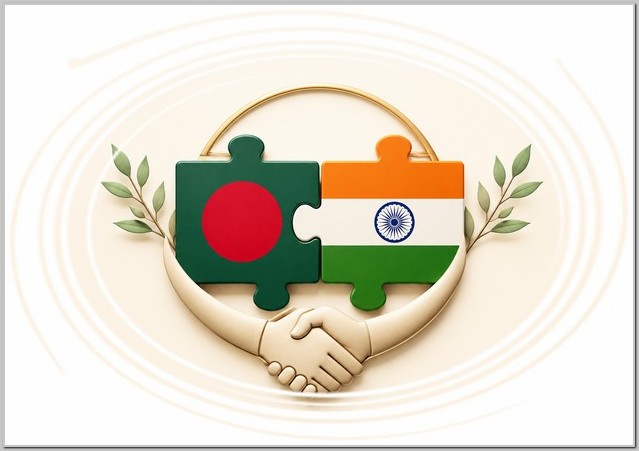
Bangladesh’s interim government has offered one of its clearest signals yet on the future direction of relations with India, emphasizing cooperation while insisting that bilateral engagement must be grounded in mutual respect and reciprocity.
Speaking at the “Roadmap for Trade, Growth & Economic Diplomacy 2026” conference in Dhaka, Prime Minister’s Foreign Affairs Adviser Humaiun Kobir outlined a vision that seeks neither confrontation nor dependence, but a recalibrated partnership reflecting Bangladesh’s evolving political realities and national interests.
His remarks suggest that Dhaka is pursuing what could be described as a “reset strategy” in relations with New Delhi. While reaffirming the importance of maintaining close ties with a key neighbor, he argued that the relationship inherited by the current government suffered from structural imbalances and failed to adequately reflect the interests of the Bangladeshi people.
The emphasis on “mutual respect” is significant. It reflects growing expectations within Bangladesh for a more balanced relationship on issues ranging from trade and connectivity to water sharing, border management and regional cooperation. At the same time, the government appears keen to avoid escalating tensions, instead advocating continued dialogue and regular high-level engagement.
Humaiun Kobir’s comments also indicate that Bangladesh is seeking to separate state-to-state relations from domestic political controversies. His assertion that any future reset must recognise the changed political landscape in Bangladesh underscores the government’s expectation that bilateral relations should adapt to new realities rather than remain tied to past political arrangements.
The reference to Foreign Minister Khalilur Rahman’s recent visit to New Delhi and the positive outlook expressed by both sides suggest that diplomatic channels remain active despite existing strains. This points to a shared recognition that cooperation remains essential for regional stability, economic growth and connectivity in South Asia.
The broader context of the conference is equally important. Organized by the Ministry of Foreign Affairs and BIDA, the event focused on trade, investment and economic diplomacy, highlighting Bangladesh’s effort to diversify partnerships and strengthen its international economic engagement. Within this framework, relations with India are viewed not only through a political lens but also as a critical component of Bangladesh’s wider growth strategy.
Taken together, the adviser’s remarks indicate that Dhaka is not seeking a rupture in ties with New Delhi. Rather, it is advocating a recalibrated relationship—one that combines pragmatic cooperation with greater emphasis on sovereignty, equality and national interest. Whether this approach translates into a genuine reset will depend on the willingness of both countries to address longstanding concerns while identifying new areas of mutually beneficial cooperation.