Sadik Sagar, Dhaka:
Bangladesh’s move to initial a Comprehensive Partnership Agreement (CPA) with the European Union on April 20 marks a decisive shift from a largely aid-driven relationship to a broader, rules-based strategic partnership. More than a procedural step, the CPA reflects both sides’ recognition that their economic interdependence and geopolitical alignment have outgrown the framework of the 2001 Cooperation Agreement.
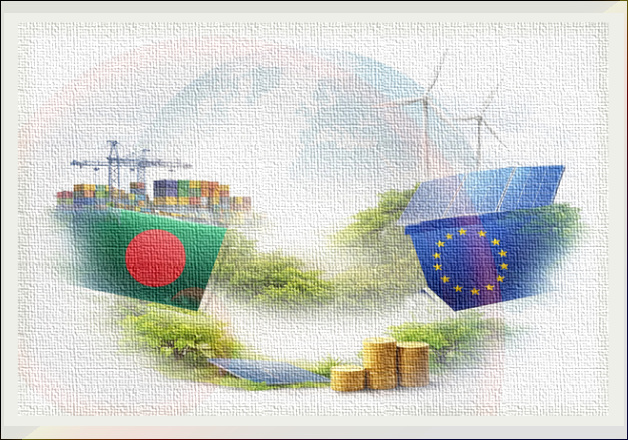
The timing is significant. Bangladesh’s export surge to the EU—from roughly $2 billion in 2000-01 to over $26 billion in 2024—has made the bloc its largest trading partner. Yet this success story faces a structural transition: the phasing out of duty-free access under the Everything but Arms scheme by 2029. The CPA, therefore, is not just symbolic; it is a pre-emptive adjustment to a post-LDC reality where Bangladesh must compete under stricter compliance regimes such as GSP Plus.
In this context, the agreement serves as a bridge. By institutionalizing cooperation through sectoral committees—covering trade, investment, labour, and environment—the CPA creates a structured pathway for Bangladesh to align with the governance and regulatory benchmarks required for continued preferential market access. This alignment is not without challenges, particularly in labour rights, environmental standards, and administrative capacity, but it also offers an opportunity to upgrade domestic industries and diversify exports beyond low-cost manufacturing.
Bangladesh’s former ambassador to the EU in Brussels, Mahbub Hasan Saleh, told The Daily Star that under the 2001 Cooperation Agreement, the Economic Relations Division (ERD) was the lead agency in dealing with the EU. With the CPA, the Ministry of Foreign Affairs will take over that role, reflecting a transition to relations based on equal footing. He also pointed to key areas for expanded cooperation, including renewable energy, clean technology, value chain upgrading, and product standardisation.
Strategically, this recalibration places Bangladesh more firmly within the EU’s evolving Indo-Pacific outlook, where economic resilience, supply chain diversification, and climate cooperation are key priorities. Dhaka’s vulnerability to climate change and its growing role in regional connectivity make it a natural partner in initiatives like the Global Gateway Initiative.
Ultimately, the CPA is less an endpoint than a strategic pivot. It redefines Bangladesh–EU relations on “equal footing,” but also raises the bar for Dhaka’s economic governance. Whether Bangladesh can translate this upgraded framework into tangible gains will determine if the CPA becomes a catalyst for long-term transformation or merely a diplomatic milestone.