Special Correspondent, Dhaka:
India has expressed strong optimism that an expected visit by Prime Minister Tarique Rahman will open a new chapter in Bangladesh-India relations, with Indian High Commissioner to Bangladesh Dinesh Trivedi indicating that high-level political engagement could help resolve longstanding bilateral issues.
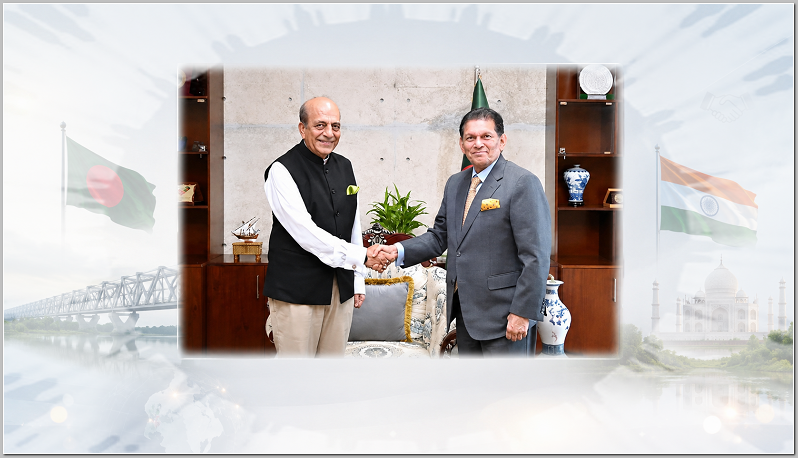
Speaking after separate meetings with Foreign Minister Dr. Khalilur Rahman and State Minister for Foreign Affairs Shama Obaed Islam on Wednesday, Trivedi said New Delhi is “very hopeful” that the prime minister’s visit to India will take place in the near future.
His remarks underscore India’s growing expectation that direct engagement with Bangladesh’s new political leadership will inject fresh momentum into bilateral ties. “Once the prime minister visits India, things will move forward constructively,” the envoy said, while stressing that there is “no problem that cannot be sorted out through mutual understanding.”
The comments come as India has invited Prime Minister Tarique Rahman to attend the 18th BRICS Summit in New Delhi on September 12-13. Bangladesh has confirmed that the invitation has been forwarded to the Prime Minister’s Office, where a final decision is expected.
By repeatedly emphasizing its readiness to welcome the Bangladeshi leader, New Delhi appears keen to signal that it wants to move beyond recent diplomatic uncertainties and restore regular high-level exchanges. Such visits have historically played a crucial role in setting the direction of Bangladesh-India relations.
Although Trivedi did not announce any specific agreements, his references to ongoing working groups suggest India expects negotiations on key issues—including the Teesta River water-sharing agreement, the Ganges Water Treaty, trade, connectivity and border cooperation—to gain pace following a summit-level meeting.
Whether the anticipated visit produces concrete breakthroughs remains uncertain. Nevertheless, India’s public messaging indicates that it sees Tarique Rahman’s visit not merely as a ceremonial engagement but as an important diplomatic opportunity to strengthen trust, advance unresolved agendas and reaffirm the strategic partnership between the two neighboring countries.