Staff Correspondent, Dhaka:
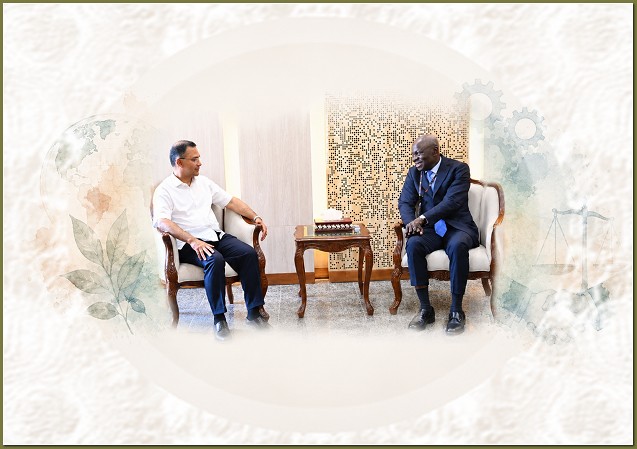
The government’s Bangladesh labor reforms agenda received renewed international endorsement as International Labor Organization (ILO) Director-General Gilbert F. Houngbo reaffirmed the UN agency’s commitment to expanding cooperation with Dhaka during his meeting with Prime Minister Tarique Rahman. The high-level engagement signals growing global confidence in Bangladesh’s labor governance while highlighting the country’s efforts to align its employment policies with international standards amid evolving economic and trade realities.
During the meeting, Prime Minister Tarique Rahman reiterated that protecting workers’ rights, ensuring workplace safety and implementing international labor standards remain among his government’s highest priorities. These commitments come at a crucial time as Bangladesh seeks to strengthen its global competitiveness, diversify exports and prepare for its graduation from the Least Developed Country (LDC) category.
The ILO chief’s recognition of Bangladesh’s ongoing reforms carries significance beyond labor policy. International confidence in labor governance increasingly influences trade relations, foreign investment and global supply chain decisions, particularly in the ready-made garment sector, which remains the country’s largest export industry. Continued progress in workplace safety and labor rights could further enhance Bangladesh’s reputation among international buyers and development partners.
The discussion also reflected a broader vision for Bangladesh labor reforms, extending beyond compliance with international conventions. Both sides emphasized skills development, employment generation, support for the informal economy and preparing a workforce capable of meeting the demands of a rapidly changing global labor market. Ensuring the rights of migrant workers and strengthening orderly migration were also identified as strategic priorities, recognizing the sector’s importance to remittance inflows and economic stability.
The meeting demonstrated that labor reform is increasingly viewed as both a social responsibility and an economic strategy. By strengthening cooperation with the ILO, Bangladesh is positioning itself to improve workers’ welfare while reinforcing its standing as a responsible manufacturing and labor-exporting nation. Sustained implementation of these commitments will be critical in translating international recognition into long-term economic resilience, inclusive growth and greater global competitiveness.