Senior Correspondent, Dhaka:
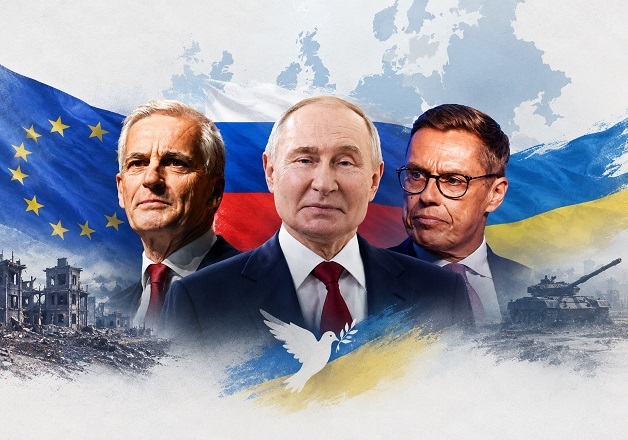
Efforts by Finland and Norway to engage Russian President Vladimir Putin on ending the war in Ukraine have exposed a growing dilemma for Europe: how to secure a role in peace negotiations without undermining its collective diplomatic position.
Finnish President Alexander Stubb and Norwegian Prime Minister Jonas Gahr Støre held talks with Putin on Tuesday, describing their discussion as “frank and substantive” ahead of US-mediated negotiations scheduled for next month in Abu Dhabi. Their stated aim was to convey European perspectives directly and help advance a possible settlement.
However, the initiative drew criticism from other European leaders, who argued that bilateral outreach without prior coordination could weaken the continent’s negotiating leverage. Danish Prime Minister Mette Frederiksen expressed skepticism, while Swedish Prime Minister Ulf Kristersson said he and other leaders had not been informed of the discussions.
The disagreement reflects a broader concern that Europe could be marginalized as Washington and Moscow pursue negotiations over Ukraine’s future. With US President Donald Trump driving the latest diplomatic initiative, European governments face pressure to establish a common position before individual leaders engage the Kremlin.
The challenge is not simply gaining access to Putin but ensuring that any settlement does not compromise Ukraine’s sovereignty or European security interests. If European governments approach Moscow separately, Russia could exploit their differences and portray European resistance to its demands as an obstacle to peace.
The Kremlin’s response offered little indication of a shift in its position. Russian Foreign Minister Sergey Lavrov said the talks had produced nothing new, while Moscow reiterated that any long-term settlement must take Russia’s stated security interests into account. These positions suggest that significant differences remain over the terms of a possible agreement.
The timing is particularly important as preparations continue for the next round of US-mediated talks. European leaders are concerned that decisions affecting Ukraine and the continent’s security could be shaped without adequate European participation.
Yet insisting on a unified diplomatic approach also presents difficulties. Europe must reconcile different national assessments of Russia while maintaining support for Kyiv and preserving channels for negotiations.
Ultimately, the Nordic initiative highlights a strategic question for Europe: whether independent diplomatic engagement can advance peace or whether a coordinated approach is essential to prevent divisions from weakening its influence over the outcome of the war.