Senior Correspondent, Dhaka:
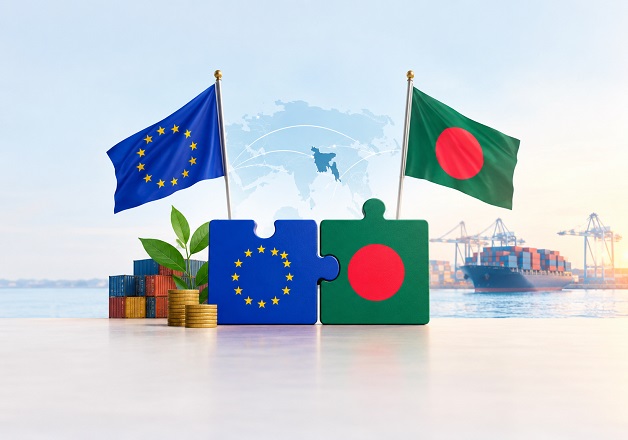
The European Union is seeking to reshape its economic relationship with Bangladesh around greater reciprocity, investment, and long-term strategic cooperation as the country approaches graduation from least developed country status.
Speaking at the Bay of Bengal Conversation 2026 in Dhaka, EU Ambassador Michael Miller described Bangladesh as a partner of growing strategic importance and said the bloc wanted future engagement to be “balanced, reciprocal, and mutually beneficial.”
The shift would move bilateral economic relations beyond the traditional donor-recipient framework. Miller said the EU was prepared to match Bangladesh’s ambition, including by exploring a future free trade agreement, while stressing that deeper ties would depend on stronger institutions, rule of law, labor and human rights protections, environmental standards, and good governance.
The emphasis reflects the challenges facing Bangladesh as it prepares for a post-LDC trade environment. The EU’s Everything But Arms scheme has played a major role in supporting Bangladesh’s export growth, particularly in garments. Sustaining competitiveness will increasingly require export diversification, skilled workers, stronger infrastructure, and administrative reform.
Miller’s remarks also indicate that market access and investment will increasingly be linked to institutional credibility. For Bangladesh, attracting European capital and technology could support economic diversification, but doing so will require predictable policymaking, accountability, and continued reform.
The emerging relationship therefore appears less about aid and more about building a rules-based economic partnership capable of supporting Bangladesh’s next phase of development.