Special Correspondent, Dhaka:
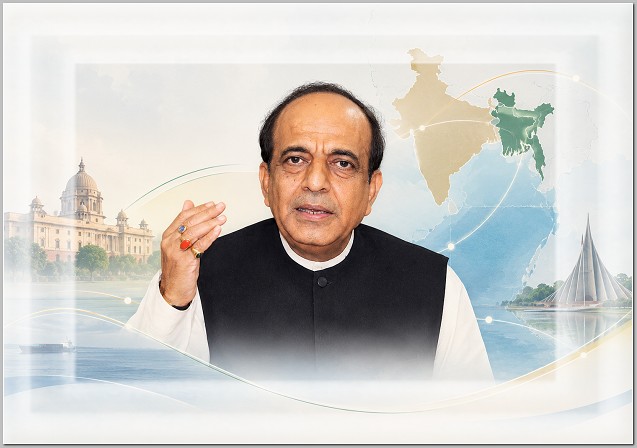
Indian High Commissioner to Bangladesh Dinesh Trivedi has stressed continuous dialogue, mutual respect, and trust as the basis for addressing outstanding issues between Dhaka and Delhi, while acknowledging Bangladesh’s right to pursue its own national interests and foreign-policy choices.
Speaking at a discussion titled “Power and Prudence: Managing Great-Power Competition without Conflict” during the Bay of Bengal Conversation in Dhaka on Saturday, Trivedi said bilateral concerns should not be avoided but addressed through appropriate forums and sustained engagement.
He identified water, trade, culture, sports, communication, and transportation among the areas requiring continued discussion. While acknowledging that the process could be slow, he said engagement between the two countries had not stopped and expressed confidence that solutions could be found.
Trivedi’s comments also reflected an emphasis on sovereignty in bilateral relations. He described Bangladesh as an independent country whose government has the right to make its own decisions, saying no one should dictate what Bangladesh should do. He also said India’s relationship with Bangladesh does not depend on Dhaka’s relations with other countries, while stressing that both sides have legitimate national interests to protect.
At the same time, the envoy framed the relationship as extending beyond conventional transactional interests. Pointing to deep historical and cultural connections, particularly the shared Bengali heritage associated with Rabindranath Tagore, he argued that people-to-people ties provide a broader foundation for bilateral relations.
Trivedi also acknowledged that disagreements are normal between neighboring democracies. Rather than portraying differences as exceptional, he described them as part of an ongoing relationship that requires consultation and trust.
His remarks therefore place dialogue at the center of managing Dhaka-Delhi differences while linking meaningful engagement with respect for sovereignty and reciprocal interests. The emphasis suggests that bilateral relations remain a work in progress, with unresolved issues requiring sustained institutional engagement rather than avoidance or unilateral approaches.