Special Correspondent, Dhaka:
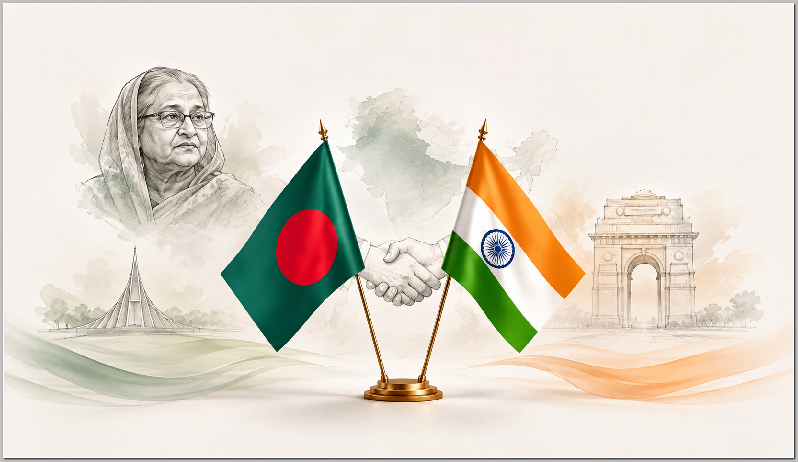
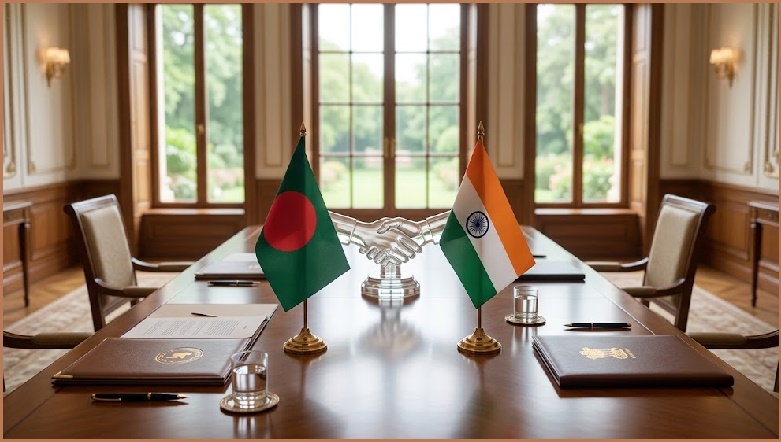
Indian High Commissioner to Bangladesh Dinesh Trivedi’s latest remarks point to a cautious but visible effort by Dhaka and New Delhi to rebuild diplomatic momentum, although his emphasis on timing and the absence of urgency also suggests that the two sides are still managing important political sensitivities.
Describing Bangladesh-India relations as “absolutely positive,” Trivedi said India’s invitation to Prime Minister Tarique Rahman remains open and that his visit to New Delhi should take place at a mutually convenient time. His message was notable not simply for its optimism but for its measured tone: he repeatedly stressed that there was “no need for a hurry” and that both sides should give the process “due time.”
The remarks came after Trivedi met State Minister for Foreign Affairs Humaiun Kobir in Dhaka. Kobir, according to the Bangladesh side, reiterated Dhaka’s commitment to a forward-looking and mutually respectful relationship with India. The meeting therefore carries significance beyond a routine diplomatic courtesy call, as it reflects continuing official-level communication at a time when the two countries are attempting to recalibrate their relationship.
The broader diplomatic messaging from New Delhi has also moved in a similar direction. Indian Foreign Ministry spokesperson Randhir Jaiswal said last week that India wants a “positive, constructive, and forward-looking” relationship with Bangladesh and is prepared to discuss bilateral issues through existing structured mechanisms.
Taken together, the statements suggest that both sides are currently prioritizing engagement over confrontation, but without claiming that all differences have been resolved. The distinction is important. Positive diplomatic language can create political space for negotiations, but tangible improvement in relations ultimately depends on progress on substantive bilateral matters and the ability of both governments to manage politically sensitive issues.
Trivedi’s comments on political “compulsions” on both sides are particularly revealing in this context. While he did not identify those pressures, acknowledging their existence indicates that the pace of diplomatic normalization is influenced not only by foreign-policy considerations but also by domestic political calculations.
The proposed visit of Prime Minister Tarique Rahman to India could consequently become an important test of the current diplomatic momentum. Trivedi’s insistence that the visit should occur at a mutually convenient time indicates that both governments may be avoiding a high-profile engagement before the necessary groundwork is completed.
At the same time, the frequency of recent diplomatic contacts provides evidence that communication channels remain active. The challenge now is to convert the current positive rhetoric into sustained institutional dialogue and measurable progress.
For Dhaka and New Delhi, the emerging picture is therefore neither a complete reset nor a return to previous patterns. Rather, it is a cautious phase of diplomatic re-engagement, in which confidence-building, political timing, and substantive negotiations will determine whether the present positive tone develops into a more stable bilateral framework.