Sadik Sagar, Dhaka:
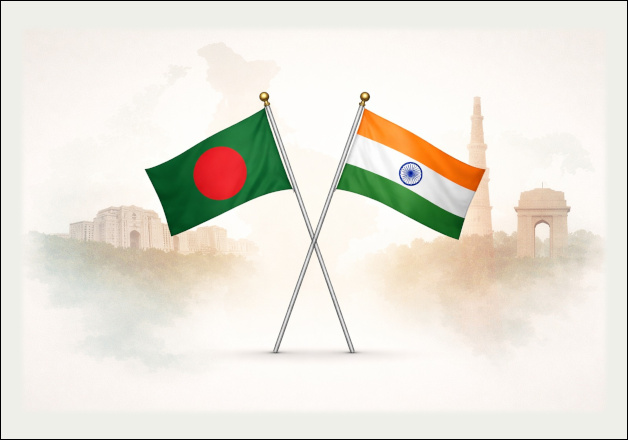
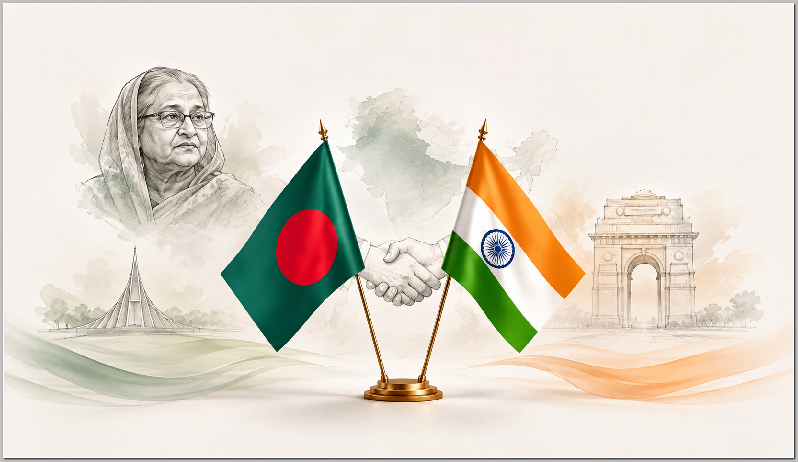
Bangladesh and India are facing a fresh diplomatic test after Dhaka urged New Delhi to prevent ousted former prime minister Sheikh Hasina from using Indian territory for political activities that it believes could destabilize Bangladesh. While the issue has injected new sensitivity into bilateral relations, officials from both countries have also reiterated their commitment to preserving cooperation, signaling that neither side wants the matter to overshadow broader strategic ties.
The issue came to the forefront during a meeting between Prime Minister’s Foreign Affairs Adviser Humaiun Kobir and newly appointed Indian High Commissioner Dinesh Trivedi in Dhaka on Monday. Kobir requested India’s cooperation in ensuring that Sheikh Hasina, or members of organisations banned in Bangladesh, are not allowed to use Indian soil to deliver political speeches or conduct activities aimed at creating instability in Bangladesh.
The request follows reports circulating on social media that Hasina may virtually address a programme on August 5, marking the anniversary of her departure to India after the student-led mass uprising in 2024. Although the reports remain unconfirmed, the development has become a diplomatic concern for Dhaka, which has consistently maintained that fugitives should not be allowed to conduct political activities from foreign territory.
However, Bangladesh has been equally careful to avoid turning the issue into a broader dispute with India. Officials emphasised that the reported event is not an initiative of the Indian government, reflecting Dhaka’s effort to distinguish between actions by private groups and the official position of New Delhi. This measured approach indicates that Bangladesh intends to address its security concerns without undermining long-term bilateral engagement.
State Minister for Foreign Affairs Shama Obaed Islam reinforced that position, saying Bangladesh remains committed to a forward-looking relationship with India based on mutual interests. She said Dhaka expects India to clarify its position regarding the reported program but stressed that Bangladesh does not want the issue to damage bilateral relations.
For India, the matter presents a diplomatic balancing act. On one hand, it must respond to Bangladesh’s concerns, while on the other, it will likely seek to avoid appearing directly involved in the domestic political disputes of its neighbor. The assurance by Indian High Commissioner Dinesh Trivedi that the matter would receive due consideration suggests New Delhi is aware of the issue’s diplomatic sensitivity.
Beyond the immediate controversy, the episode illustrates the evolving nature of Bangladesh-India relations under the current political landscape. Both countries continue to expand cooperation in trade, investment, connectivity, energy and regional security, making it unlikely that either government would allow a single contentious issue to derail wider strategic engagement.
Nevertheless, Dhaka’s latest request underlines a broader expectation that friendly neighbors should be mindful of each other’s security concerns. How India responds in the coming days could influence public perception in Bangladesh, particularly if the reported August 5 program materializes.
For now, both governments appear determined to manage the issue through dialogue rather than confrontation. That approach may help prevent a temporary political controversy from evolving into a larger diplomatic challenge, while reinforcing the importance of mutual trust in sustaining one of South Asia’s most significant bilateral relationships.