Staff Correspondent, Dhaka:
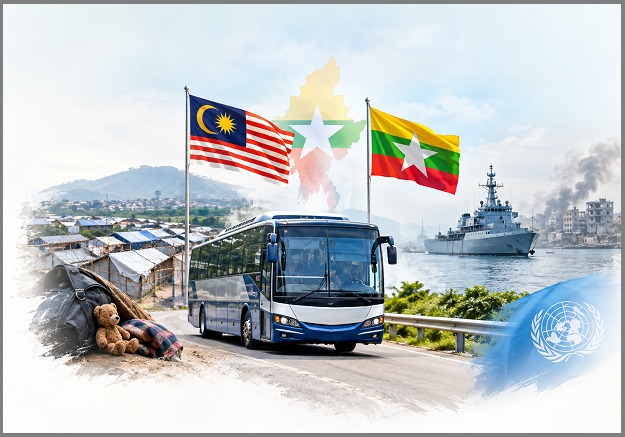
Malaysia’s decision to repatriate 1,476 Myanmar nationals marks a significant shift in its approach to managing a large and increasingly contentious refugee population. The first group, sent back on September 29 under a program involving up to 5,000 people, reflects Kuala Lumpur’s effort to address immigration pressures while deepening engagement with Myanmar. The government says the returns are voluntary and part of an orderly process.
The central issue, however, is whether “voluntary” return can be sufficiently verified when people are being returned from detention centers and have limited legal protection in Malaysia. UNHCR has said it was not involved in the repatriation process and has warned that Myanmar remains unsafe for many potential returnees. Under the principle of non-refoulement, people should not be returned to places where they face persecution, torture, or serious harm.
The uncertainty is particularly significant for the Rohingya, who constitute a large majority of Myanmar refugees and asylum seekers in Malaysia. Authorities have not publicly clarified how many Rohingya were included in the first group, making independent assessment of protection risks difficult. More than 160 civil-society organizations had urged Malaysia to halt the planned returns, citing continuing conflict and risks to vulnerable communities.
The policy therefore presents Malaysia with competing considerations: immigration control, domestic security, and public pressure on one side, and refugee protection and international legal principles on the other. The credibility of subsequent repatriation phases will depend heavily on transparency, genuine consent, individual risk assessments, and credible safeguards after return.
With Myanmar’s conflict still unresolved, the program is likely to remain a test of how Malaysia balances sovereign migration policy with its humanitarian responsibilities.