Special Correspondent, Dhaka:
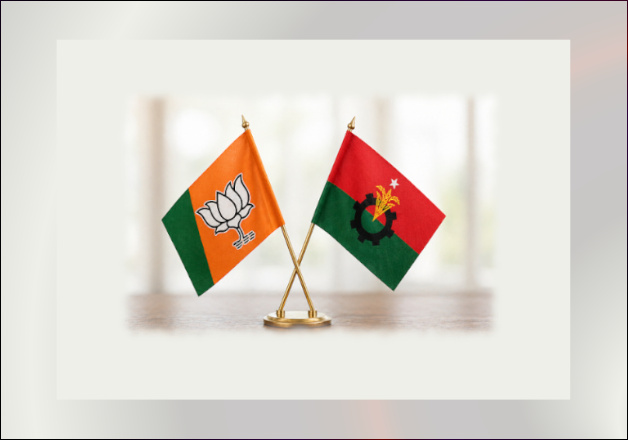
Following a modest improvement in relations between India and Bangladesh after the electoral victory of the Bangladesh Nationalist Party (BNP) under Tarique Rahman, both sides appear to be recalibrating their political approach. The emerging engagement between India’s ruling Bharatiya Janata Party (BJP) and the BNP reflects a cautious effort to rebuild trust with a leadership New Delhi had historically viewed with reservation.
Recent remarks by Head of the Department of Foreign Affairs of India’s ruling Bharatiya Janata Party (BJP) Vijay Chauthaiwale highlight a subtle but important shift toward structured political dialogue between the two parties. This signals an attempt to deepen party-to-party engagement—an area that has traditionally remained underdeveloped despite relatively strong state-level cooperation at various points in bilateral relations.
The timing of this outreach is particularly significant. With Tarique Rahman now at the helm in Dhaka, India appears to be adjusting its engagement strategy by strengthening direct political communication channels alongside conventional diplomacy. Chauthaiwale’s reference to high-level interest—including a letter from Rahman to BJP President Nitin Nabin—suggests that this initiative carries institutional weight and is not merely symbolic.
Historically, India’s Bangladesh policy has been largely state-centric, often relying on government-to-government ties rather than sustained partisan engagement. The BJP’s willingness to expand dialogue with the BNP indicates a recognition of shifting political realities in Dhaka and a desire to ensure continuity in bilateral relations irrespective of domestic political changes.
Parallel diplomatic interactions further reinforce this evolving approach. Engagements involving Bangladesh’s foreign policy leadership suggest that political dialogue is being complemented by formal diplomatic channels, creating a more layered and resilient framework for cooperation. The role of platforms such as the Hudson Institute also underscores growing international attention to the trajectory of India–Bangladesh relations.
From a strategic standpoint, enhanced BJP–BNP communication could help reduce mistrust and improve coordination on key issues, including trade, connectivity, and regional security. However, the durability of this outreach will depend on whether it evolves beyond symbolic exchanges into sustained institutional mechanisms.
Overall, the emerging dialogue reflects a pragmatic recalibration by both sides—one aimed at stabilising and future-proofing Dhaka–Delhi relations in a changing political landscape.