
Staff Correspondent, Dhaka:
Bangladesh’s decision to host its inaugural Trade and Investment Conference 2026 marks a significant step in the country’s effort to reposition itself in the global economy ahead of its graduation from Least Developed Country (LDC) status in November 2026. The conference, themed “Navigating Risks – Unlocking Resilience,” reflects Dhaka’s growing recognition that the post-LDC era will require stronger economic competitiveness, diversified investment flows, and deeper global integration.
The event, jointly organized by the Ministry of Foreign Affairs and the Bangladesh Investment Development Authority (BIDA), comes at a strategically important moment for the country. While Bangladesh has achieved impressive economic growth over the past decade, LDC graduation will gradually phase out several international trade preferences and concessional benefits that have long supported its export-driven economy, particularly the garment sector.
By bringing together government policymakers, diplomats, development institutions, investors, and business leaders, the conference appears designed to send a clear signal to international stakeholders that Bangladesh is preparing proactively for the transition. The participation of around 350 delegates also highlights the government’s intention to create a broader platform for economic diplomacy and investor engagement.
The conference agenda suggests that Bangladesh is seeking to broaden its economic vision beyond traditional manufacturing. Discussions on artificial intelligence, creative industries, sports, financing, and industrial competitiveness indicate an attempt to explore emerging growth sectors and modernize the country’s economic structure. This reflects an understanding that future competitiveness will depend not only on low-cost labor but also on innovation, technology adoption, and value-added industries.
Equally important is the conference’s focus on foreign direct investment (FDI) and capital mobilization. Despite sustained economic growth, Bangladesh has historically attracted lower levels of FDI compared to many regional peers. Improving the investment climate, ensuring policy consistency, and strengthening infrastructure will therefore remain central challenges for the country’s economic transformation.
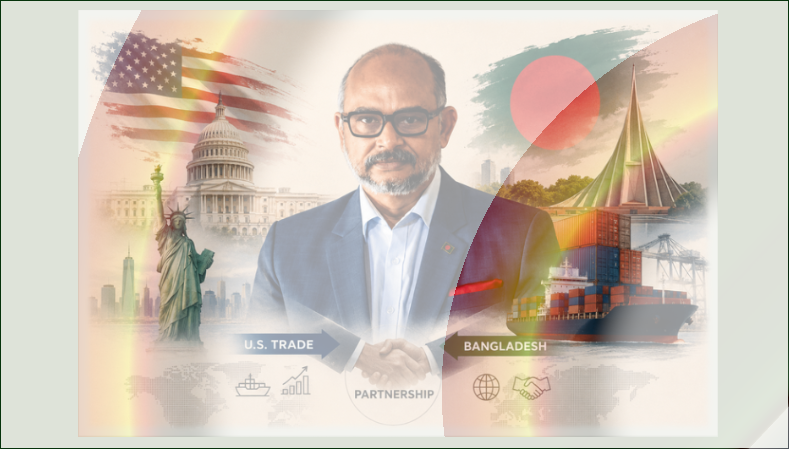
The initiative also demonstrates Bangladesh’s increasing use of economic diplomacy as it negotiates new bilateral trade and investment agreements in preparation for the post-LDC environment. Overall, the conference represents more than a policy event; it is a strategic attempt to redefine Bangladesh’s economic narrative as a resilient and investment-ready emerging economy.