Sadik Sagar, Dhaka:
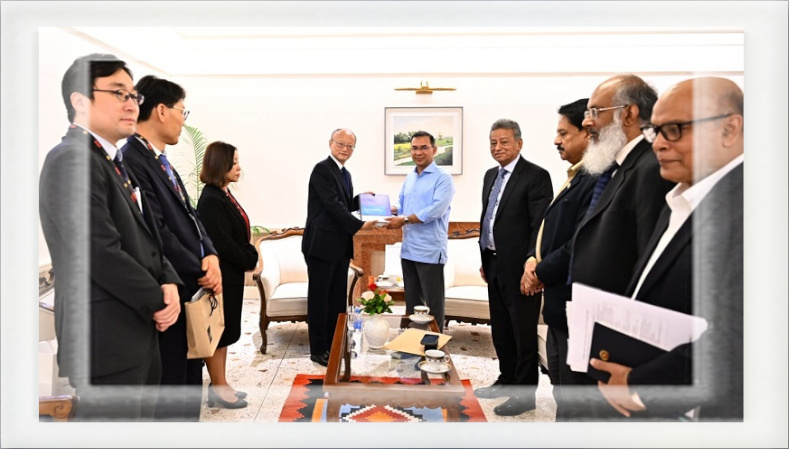
The Asian Development Bank’s (ADB) announcement of a planned $5 billion financing package for Bangladesh over the next five years signals growing international confidence in the country’s long-term economic potential despite mounting short-term pressures. The commitment, unveiled during ADB President Masato Kanda’s meeting with Prime Minister Tarique Rahman, comes at a critical period as Bangladesh navigates macroeconomic stress, geopolitical uncertainty, and its transition from Least Developed Country (LDC) status.
The proposed funding under the Integrated Growth Network Development Initiative reflects a strategic shift toward supporting broader economic resilience rather than simply financing isolated infrastructure projects. By focusing on connectivity, regional growth, investment expansion, and job creation, the initiative appears designed to help Bangladesh build a more diversified economy capable of withstanding external shocks.
The timing of the announcement is particularly significant. Bangladesh is facing persistent inflation, foreign exchange pressure, and stress within the banking sector, while the economic fallout from the Middle East conflict has increased costs for fuel, liquefied natural gas, fertilizer, and shipping. In this context, the ADB’s decision to scale up support by an additional $250 million demonstrates concern among development partners over Bangladesh’s near-term economic vulnerabilities.
Equally important is the ADB’s plan to raise its annual sovereign lending commitments to Bangladesh by 20%, from roughly $2 billion to $2.4 billion. This suggests the lender sees Bangladesh as a continuing strategic priority within Asia, particularly as the country seeks to maintain growth momentum after losing preferential trade benefits following LDC graduation in 2026.
The emphasis on economic diversification is another notable aspect of the initiative. Bangladesh’s economy has long relied heavily on the ready-made garment sector, making it vulnerable to external demand shocks. The ADB’s focus on stronger institutions, diversified exports, energy resilience, and capital market development indicates a broader effort to support structural reforms that could attract greater private investment and improve economic sustainability.
The lender’s engagement with private sector leaders during the visit further highlights a growing recognition that public financing alone will not be sufficient to meet Bangladesh’s development ambitions. Mobilizing private capital, improving governance, and preparing bankable projects are increasingly viewed as essential to sustaining long-term growth.
Overall, the ADB package represents more than financial assistance; it is a strategic endorsement of Bangladesh’s economic transition agenda and a signal that international development partners remain invested in the country’s future stability and growth trajectory.