Sadik Sagar, Dhaka:
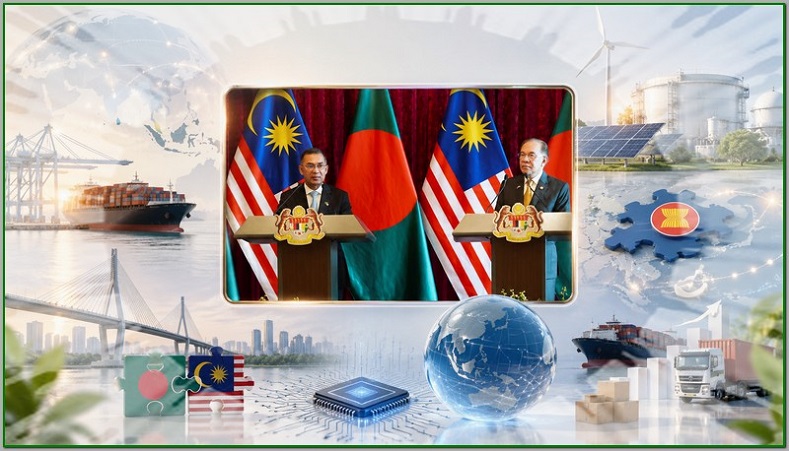
Bangladesh and Malaysia have signaled a significant upgrade in their bilateral relationship, transforming what was once a largely labor-driven partnership into a broader strategic engagement spanning trade, technology, defense, energy and regional diplomacy. Prime Minister Tarique Rahman’s first official foreign visit since assuming office has therefore carried implications well beyond ceremonial diplomacy, reflecting Dhaka’s growing effort to diversify economic partnerships and deepen its integration with Southeast Asia.
The most consequential outcome of the visit was the renewed commitment to conclude the proposed Malaysia-Bangladesh Free Trade Agreement (MBFTA) by 2027. As Bangladesh prepares for its post-LDC transition and seeks new growth drivers, enhanced market access and investment ties with Malaysia could help strengthen export competitiveness and attract greater foreign direct investment. The planned Malaysia-Bangladesh Joint Business Council further indicates a shift toward institutionalizing private-sector cooperation, creating a framework for sustained commercial engagement.
Equally important was Malaysia’s support for Bangladesh’s aspiration to join the Regional Comprehensive Economic Partnership (RCEP), the world’s largest trade bloc. Although accession remains a long-term process requiring substantial domestic reforms, Kuala Lumpur’s backing provides Dhaka with valuable diplomatic momentum. For Bangladesh, RCEP participation would not only expand trade opportunities but also strengthen its integration into regional supply chains at a time when global manufacturing networks are being reconfigured.
The visit also underscored Bangladesh’s ambition to strengthen engagement with ASEAN. By seeking Sectoral Dialogue Partner status, Dhaka is signaling its intention to become a more active stakeholder in Southeast Asian affairs. Malaysia’s constructive support could help Bangladesh gain greater visibility and influence within one of the world’s most dynamic economic regions.
Another notable dimension of the partnership is the growing focus on emerging technologies. Cooperation in artificial intelligence, semiconductors, fintech and cybersecurity reflects Bangladesh’s desire to move beyond traditional labor-intensive sectors and develop a more knowledge-based economy. Malaysia’s established semiconductor industry offers practical opportunities for skills transfer, workforce development and technological upgrading.
Labor migration remains central to the relationship, but discussions suggest a more structured and sustainable approach. The planned review of existing labor agreements and efforts to ensure transparent recruitment mechanisms could help address longstanding concerns while preserving employment opportunities for Bangladeshi workers.
Defense cooperation, energy security and the halal industry also emerged as important pillars of the expanding partnership. From LNG collaboration and Bay of Bengal energy investments to military exchanges and peacekeeping cooperation, both countries appear committed to building a multidimensional relationship.
Ultimately, the visit reflects a strategic convergence of interests. For Bangladesh, Malaysia offers a gateway to ASEAN, advanced manufacturing and regional markets. For Malaysia, Bangladesh represents a fast-growing economy, a significant labor partner and an increasingly important player in South Asia. If translated into concrete outcomes, the agreements reached during this visit could mark the beginning of a more comprehensive and strategically significant partnership between the two countries.