Senior Correspondent, Dhaka:
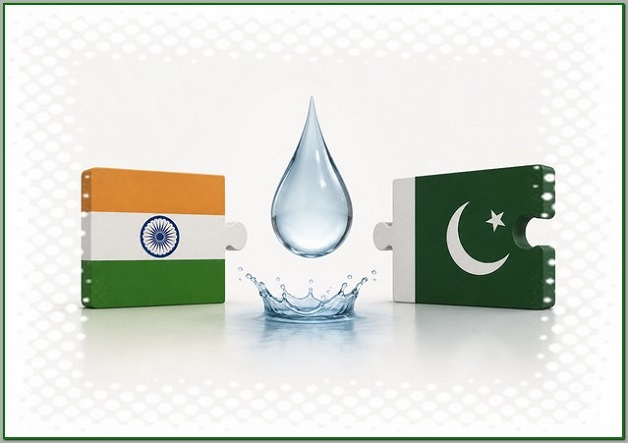
Pakistan Defense Minister Khawaja Asif’s recent threat of war against India over water security reflects a growing convergence of geopolitical tensions and domestic vulnerabilities. While the statement appears aimed at signaling resolve in the aftermath of India’s suspension of the Indus Waters Treaty (IWT), it also underscores Islamabad’s increasing difficulty in managing a severe internal water crisis that is eroding economic stability and public confidence.
The timing of Asif’s remarks is significant. India suspended the 1960 Indus Waters Treaty following the April 2025 terrorist attack in Pahalgam, which killed 26 people. New Delhi has linked any restoration of the treaty to what it describes as verifiable Pakistani action against cross-border terrorism. As a result, water has emerged as a new strategic pressure point in an already strained bilateral relationship.
However, Pakistan’s narrative that India is “weaponising water” faces scrutiny. The Indus Waters Treaty historically allocated the majority of the Indus basin waters to Pakistan, granting it access to roughly 80 percent of the system. Despite this advantage, Pakistan has struggled for decades with inefficient irrigation networks, poor water storage capacity, groundwater depletion, and provincial disputes over water allocation.
The country’s current crisis appears to be driven as much by internal governance failures as by external pressures. Water shortages in Sindh and Balochistan have intensified, while official figures reveal alarming deficits across major canal systems. The North West Canal reportedly faces a 64 percent shortfall, while shortages in the Rice and Dadu canals threaten agricultural productivity and rural livelihoods. Falling water levels at the Sukkur Barrage, a lifeline for Pakistan’s farming sector, further highlight the structural nature of the problem.
Against this backdrop, the defense minister’s war rhetoric serves multiple purposes. Internationally, it seeks to elevate water security into a national security issue and draw attention to India’s treaty suspension. Domestically, it may help redirect public frustration away from governance failures and toward an external adversary.
Yet such rhetoric carries risks. Framing water disputes in military terms increases the possibility of escalation between two nuclear-armed neighbors. Water conflicts are rarely resolved through coercion; they require technical cooperation, transparent data sharing, infrastructure investment, and sustained diplomatic engagement.
Ultimately, Pakistan’s greatest water challenge is not likely to be Indian policy alone but the combination of climate stress, population growth, aging infrastructure, and institutional inefficiencies. Unless these structural issues are addressed, externalizing the crisis may provide political messaging value but will do little to secure the country’s long-term water future.