Shova Rahman, Dhaka:
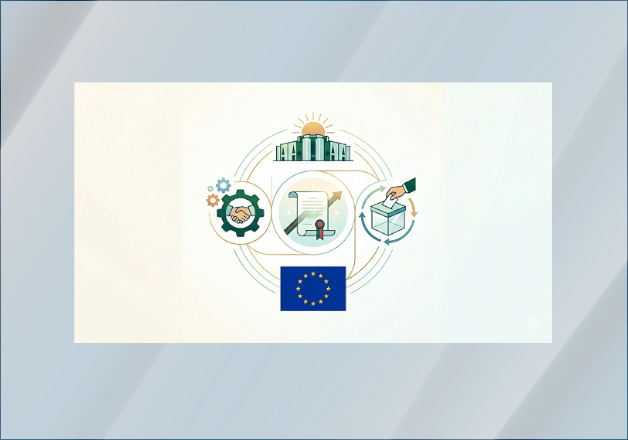
The European Union Election Observation Mission’s final report on Bangladesh’s 2026 parliamentary election has endorsed the polls as “credible” and “competently managed,” but its strongest message lies in a detailed reform agenda aimed at strengthening future democratic processes.
While Chief Observer Ivars Ijabs praised the election as the first genuinely competitive parliamentary contest since 2008, the mission made clear that sustaining this progress will depend on implementing 19 recommendations, including six priority reforms.
At the top of the list is a call to revise Bangladesh’s legal framework for parliamentary elections, which the EU said remains fragmented despite recent amendments. Observers argued that clearer and more coherent laws are needed to close loopholes, improve legal certainty, and reinforce public trust in future polls.
A second major recommendation focuses on greater transparency in vote counting and tabulation. The mission urged authorities to modernise result management systems and ensure clearer publication of polling data at upazila and district levels. Although the 2026 vote count was broadly accepted, slow and largely analogue reporting limited timely public access to nationwide results.
The EU also placed strong emphasis on women’s political participation, describing their limited presence as a weakness in democratic inclusivity. It recommended amending the Representation of the People Order to ensure 33 percent women’s representation in all internal party committees by 2030. In addition, political parties should be required to nominate at least one-third women candidates in both national and local elections.
Another priority area is the digital sphere. The mission proposed changes to the Cyber Security Ordinance to create binding obligations for social media platforms, following the identification of at least 23 cases of disinformation and online attacks targeting minorities and women activists. According to observers, manipulated narratives and deceptive accounts posed growing risks to electoral integrity.
Campaign finance reform was also highlighted. Existing regulations were described as “old and ineffective,” prompting calls for stricter disclosure requirements, stronger verification systems, and improved oversight to prevent unfair advantages during elections.
The report further recommended expanding postal voting eligibility beyond overseas citizens to include homebound voters, persons with disabilities, internally displaced people, migrant workers, and students. Such a move would widen access and make participation more inclusive.
Beyond technical reforms, the EU’s recommendations underline a broader democratic challenge: credible polling day management must be matched by fair competition, equal participation, and stronger institutions year-round.
The Bangladesh Election Commission received praise for professionalism and independence during the 2026 polls. However, the report noted that newly introduced campaign rules were not always enforced consistently, at times fuelling perceptions of bias.
The overall message is clear: Bangladesh has regained electoral credibility, but maintaining it now depends on reform implementation. The 2026 election may mark a democratic turning point, yet the EU mission suggests the real test begins after the ballots are counted.