Sadik Sagar, Dhaka:
Prime Minister Tarique Rahman’s separate meetings on April 28 with senior representatives of Russia’s Rosatom and US-based Chevron Corporation highlight Bangladesh’s evolving strategy to secure energy stability through diversified international partnerships.
Held on the same day at the Prime Minister’s Cabinet Division office in the Bangladesh Secretariat, the two engagements reflected Dhaka’s parallel focus on both long-term base-load electricity generation and immediate hydrocarbon supply needs.
In the morning, Rosatom Director General Alexey Likhachev met the Prime Minister to review progress of the Rooppur Nuclear Power Plant (RNPP), Bangladesh’s largest infrastructure and energy project. According to officials, the discussions centred on national energy security and implementation status of the nuclear facility.
The Prime Minister appreciated Russia’s technical and technological support in advancing the Rooppur project, which is expected to become a cornerstone of Bangladesh’s future electricity mix. Rosatom, in turn, reaffirmed full support for Bangladesh’s nuclear energy ambitions and expressed confidence that the remaining work would be completed within the stipulated timeframe.
The RNPP carries strategic importance for Bangladesh as the country seeks to reduce dependence on imported fossil fuels, strengthen base-load generation capacity, and meet rising industrial and urban demand. If completed on schedule, the project could significantly reshape the country’s power landscape over the coming decade.
Later in the day, a delegation from Chevron Corporation also met the Prime Minister, underscoring the continued importance of natural gas in Bangladesh’s present energy equation. Chevron’s Base Assets and Emerging Countries Division President Javier La Rosa and Chevron Bangladesh President Eric M Walker were among those attending.
While official details of the afternoon meeting were limited, Chevron remains one of the most significant foreign investors in Bangladesh’s energy sector and a major contributor to domestic gas production. The engagement suggests that Dhaka remains keen to sustain international investment and technical collaboration in conventional energy even as it pursues newer sources.
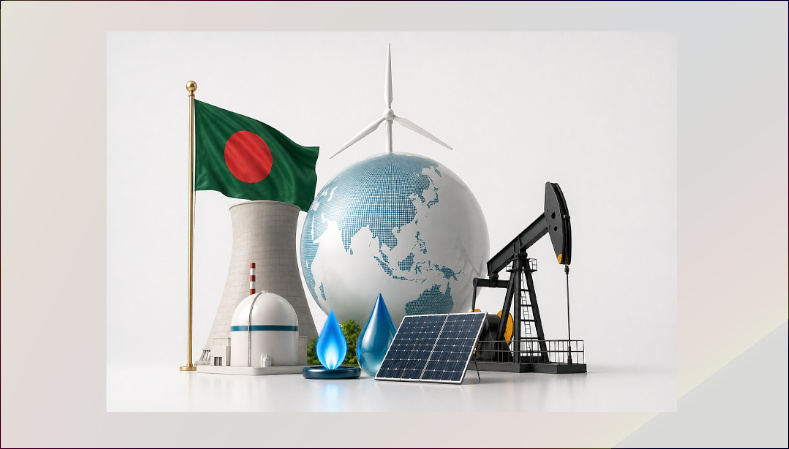
Taken together, the two meetings illustrate a pragmatic “dual-track” policy. Nuclear power offers long-term diversification and cleaner large-scale generation capacity, while gas continues to serve as an essential transition fuel supporting industries, households, and grid reliability.
The optics are also noteworthy. Hosting Russian and American energy stakeholders on the same day signals Bangladesh’s intention to maintain balanced economic diplomacy amid a complex global geopolitical environment. Rather than aligning with a single bloc, Dhaka appears focused on national interest-driven engagement with multiple partners.
Ministers and senior advisers from foreign affairs, finance, science, technology, and energy sectors attended the meetings, indicating whole-of-government attention to energy planning.
For Bangladesh, where power demand is expected to continue rising, the day’s discussions reinforce a central policy message: future energy security will likely depend not on one source or one partner, but on diversified supply, strategic investment, and steady project execution.