Sagar Rahman, Dhaka:
A fresh exchange between India and Bangladesh over alleged border push-ins and the deportation of undocumented migrants highlights an increasingly sensitive challenge in bilateral relations: managing migration, border security and nationality verification within an agreed framework.
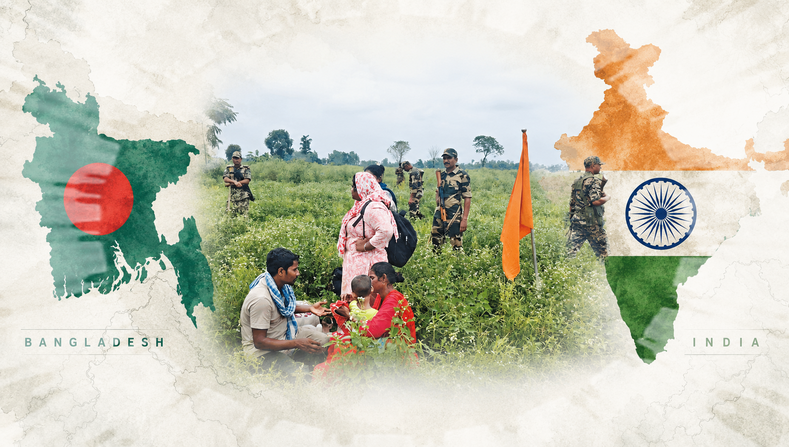
India’s latest call for Bangladesh to expedite pending nationality verification requests comes at a time when border tensions have intensified, with Bangladesh alleging multiple attempts by India’s Border Security Force (BSF) to push individuals across the frontier. While New Delhi insists it is following established procedures for deporting foreign nationals residing illegally in India, Dhaka’s border authorities argue that some actions on the ground do not reflect those stated procedures.
At the center of the dispute is the question of verification. India maintains that deportations can only proceed after Bangladesh confirms the nationality of individuals identified as Bangladeshi citizens. From New Delhi’s perspective, delays in the verification process create administrative and legal bottlenecks, slowing efforts to address illegal migration.
Bangladesh, however, appears concerned about a different issue: whether individuals are being physically moved toward the border before formal procedures are completed. The Border Guard Bangladesh (BGB) has repeatedly stated that any attempt to send people across the border outside established mechanisms would violate bilateral understandings and accepted border-management practices.
The differing narratives reveal a broader challenge. While both countries officially recognize structured repatriation mechanisms, trust can quickly erode when events on the ground are interpreted differently by the two sides. Border incidents, even when localized, often acquire diplomatic significance because they touch upon issues of sovereignty, migration management and national security.
The issue also reflects domestic political considerations in both countries. In India, illegal immigration remains a politically sensitive subject, particularly in states bordering Bangladesh. The Indian government has increasingly emphasized enforcement measures against undocumented migrants, making deportation efforts a visible component of its broader migration policy.
For Bangladesh, any perception that people are being pushed across the border without proper verification raises concerns about territorial sovereignty and the possibility of accepting individuals whose citizenship status remains disputed. Dhaka has consistently maintained that nationality must be verified through official channels before repatriation can take place.
Another notable aspect of the current situation is the growing role of border forces in shaping the diplomatic narrative. Statements from both the Ministry of External Affairs (MEA) and the BGB indicate that what might otherwise be an administrative process has evolved into a matter of bilateral attention. The repeated reports of standoffs along border districts such as Jhenaidah, Jessore, and Panchagarh suggest that operational border management is increasingly intersecting with diplomatic engagement.
The immediate challenge for both governments is to prevent tactical border incidents from escalating into a broader political dispute. The existence of established verification and repatriation mechanisms indicates that institutional channels already exist to address such issues. However, their effectiveness depends on timely communication, mutual confidence, and adherence to agreed procedures.
Ultimately, the current disagreement underscores a recurring reality of Bangladesh-India relations: cooperation on migration and border management remains essential, but it also remains one of the most sensitive areas of the bilateral relationship. How both sides handle the verification backlog and allegations of push-ins in the coming weeks may influence not only border stability but also the broader atmosphere of bilateral engagement.