Special Correspondent, Dhaka:
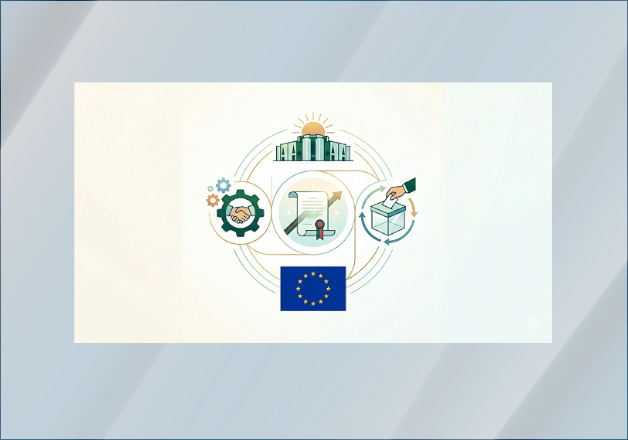
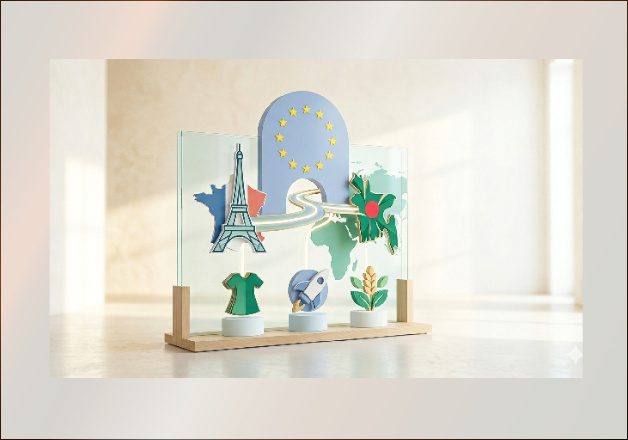
Bangladesh and France have signaled a shared strategic priority: accelerating a Free Trade Agreement (FTA) with the European Union to future-proof trade ties and deepen economic engagement. The discussion, held during a courtesy call by director for Asia and Oceania at the French Ministry for Europe and Foreign Affairs Benoît Guidée on State Minister for Foreign Affairs Shama Obaed Islam in Dhaka, reflects a broader recalibration as Bangladesh prepares for post-LDC graduation realities.
The emphasis on an EU FTA is analytically significant. Bangladesh currently benefits from preferential market access under schemes like EBA, but these advantages will phase out after LDC graduation. A formal FTA would mitigate tariff shocks, sustain export competitiveness—especially in garments—and open pathways for diversification into higher-value sectors. France’s backing signals that key EU members may be aligning behind Bangladesh’s transition strategy, increasing the feasibility of negotiations.
Beyond trade, the meeting highlighted a multidimensional partnership spanning investment, supply chains, energy, space, defence, and human capital development. This signals an evolution from a trade-centric relationship to a broader strategic economic partnership. Notably, cooperation in skills development and migration suggests alignment with Europe’s labor market needs, while supply chain discussions reflect shifting global production patterns.
Geopolitically, Dhaka’s engagement with Paris also underscores a balancing approach—deepening ties with Europe amid an increasingly competitive Indo-Pacific landscape. The inclusion of regional and global stability issues in the dialogue indicates that economic diplomacy is being paired with political coordination.
Overall, the Dhaka–Paris convergence on an EU FTA is less about immediate trade gains and more about long-term economic resilience, signaling Bangladesh’s intent to anchor itself more firmly within European economic structures.