
Sagar Rahman, Dhaka:
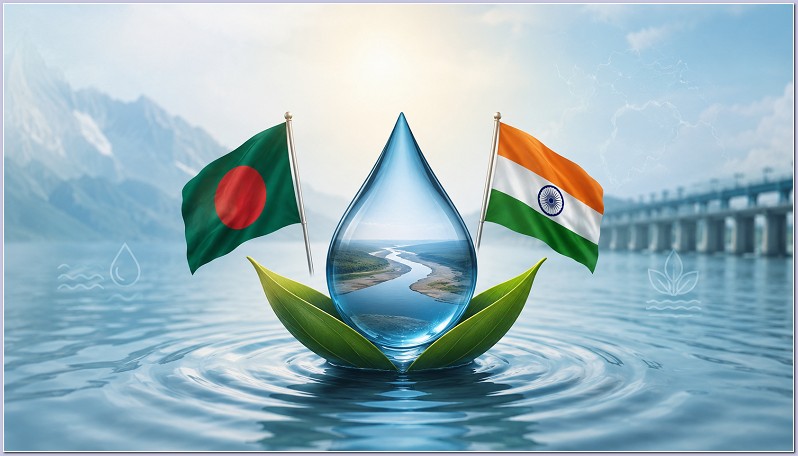
As Bangladesh and India negotiate the renewal of the Climate-Resilient Ganges Water Treaty ahead of the current agreement’s expiry on December 11, 2026, the talks have evolved beyond the traditional question of water allocation. For Bangladesh, the negotiations present a strategic opportunity to secure long-term water security through a framework that addresses climate change, ecological sustainability and scientific cooperation alongside equitable sharing of the Ganges’ dry-season flow.
A central objective for Dhaka is the restoration of a legally binding guarantee clause that existed in the 1977 Ganges Agreement but was excluded from the 1996 treaty. The safeguard would ensure a minimum water flow during periods of exceptionally low discharge, reducing Bangladesh’s vulnerability to upstream withdrawals and increasingly erratic hydrological conditions. With climate change altering rainfall patterns and Himalayan glacier melt, dependence on historical flow records alone is becoming increasingly unreliable.
The need for a Climate-Resilient Ganges Water Treaty is also driven by the growing environmental challenges facing Bangladesh’s southwest. Reduced dry-season flows have intensified salinity intrusion, threatening agriculture, freshwater fisheries, river navigation, biodiversity and access to safe drinking water. These impacts demonstrate that water-sharing negotiations today must encompass ecosystem protection as much as diplomatic compromise.
Water experts argue that the renewed treaty should adopt a basin-wide management approach rather than focusing solely on volumetric allocation. Environmental flow protection, sediment management, water quality monitoring, biodiversity conservation, transparent hydrological data sharing and coordinated climate adaptation should become integral components of the new framework. Such measures would align the agreement with global best practices in transboundary river governance.
Scientific cooperation is emerging as another pillar of future negotiations. Researchers believe joint hydrological studies, climate modelling and transparent exchange of river data can strengthen mutual confidence while improving flood forecasting and dry-season planning. Some experts also advocate expanding long-term regional cooperation to include Nepal, where several major tributaries of the Ganges originate, allowing for more effective basin-wide water management.
The negotiations also highlight the human dimension of river diplomacy. Communities living along the basin are already experiencing declining freshwater availability, increasing salinity and heightened climate risks. Their livelihoods depend on a treaty capable of balancing development needs with environmental sustainability.
If successfully negotiated, the renewed agreement could mark a transition from a water-sharing arrangement to a comprehensive water-security partnership. By embedding climate resilience, science-based decision-making and ecological responsibility, Bangladesh and India have an opportunity to establish a modern framework that safeguards millions of people while setting a regional benchmark for transboundary river cooperation.