Senior Correspondent, Dhaka:
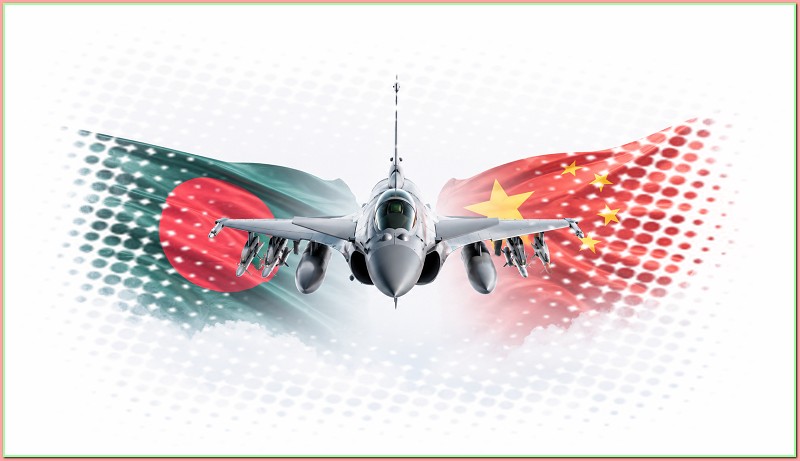
Bangladesh’s reported interest in acquiring 24 Chinese J-10CE fighter jets marks a potentially significant step in the modernization of the Bangladesh Air Force (BAF) and reflects broader trends in regional defense procurement. While no final agreement has yet been announced, reports suggest Dhaka is considering the aircraft as part of its long-term effort to replace aging fighter platforms and strengthen air combat capabilities.
The J-10CE, the export version of China’s J-10 “Vigorous Dragon,” is regarded as one of Beijing’s most advanced fourth-generation multirole fighter aircraft available on the international market. Equipped with an Active Electronically Scanned Array (AESA) radar, beyond-visual-range missile capability, and modern electronic warfare systems, the aircraft offers capabilities that are considerably more advanced than many of the older fighters currently in service with the BAF.
A primary factor behind Bangladesh’s interest appears to be the need to replace its fleet of F-7 fighter aircraft, which are based on the decades-old MiG-21 design. The BAF has been pursuing a modernization program for several years under the broader “Forces Goal 2030” framework, seeking platforms that can provide enhanced air defense, strike capability, and operational flexibility.
Cost is another important consideration. With an estimated price of around $40 million per aircraft, the J-10CE is significantly less expensive than many Western alternatives while offering modern avionics and weapons systems. For countries with limited defense budgets but growing security requirements, this combination of capability and affordability can be particularly attractive.
Bangladesh has also evaluated other fighter options, including the Eurofighter Typhoon and the jointly developed Chinese-Pakistani JF-17. The final decision will likely depend on a combination of financial terms, technology transfer opportunities, maintenance requirements, and long-term operational costs.
From China’s perspective, a potential sale would carry strategic significance. The J-10CE has so far secured only one confirmed export customer, Pakistan. A Bangladeshi purchase would provide an additional endorsement for the aircraft and support China’s efforts to expand its presence in the global defense market, where export growth has faced challenges in recent years.
The prospective deal also highlights Bangladesh’s existing defense relationship with China. A substantial portion of the country’s military inventory—including fighter aircraft, naval platforms, armored vehicles, and air defense systems—already originates from Chinese suppliers. This established logistical and training ecosystem could make integration of the J-10CE relatively straightforward compared with introducing an entirely new Western platform.
Ultimately, Bangladesh’s interest in the J-10CE appears driven less by geopolitical considerations and more by a practical assessment of military requirements, affordability, and compatibility with its existing defense infrastructure. Whether the deal materializes or not, the discussions underscore Dhaka’s continuing focus on modernizing its armed forces and maintaining a credible air defense capability in an increasingly complex regional security environment.