Staff Correspondent, Dhaka:
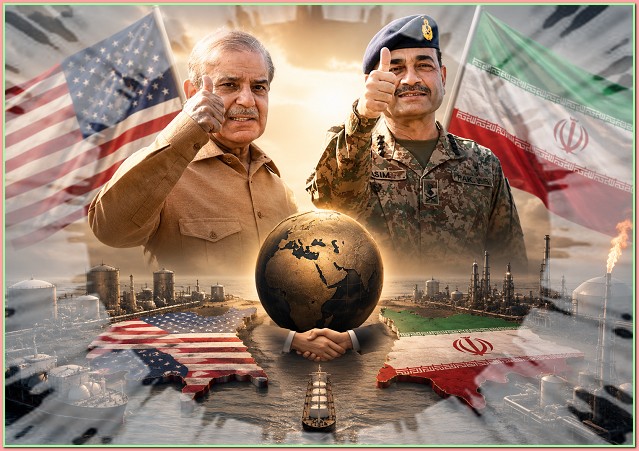
Pakistan’s reported role in facilitating dialogue between the United States and Iran has drawn international attention, highlighting Islamabad’s growing diplomatic ambitions and its ability to engage with multiple competing powers simultaneously. While the ultimate success of any US-Iran understanding will depend on the durability of negotiations and implementation of agreements, the process has already elevated Pakistan’s profile as a regional diplomatic actor.
Analysts argue that Pakistan’s unique geopolitical position enabled it to contribute to efforts aimed at reducing tensions between Washington and Tehran. Unlike many countries in the region, Islamabad maintains working relations with both Iran and the United States while also enjoying close ties with key Gulf states, including Saudi Arabia and Qatar. At the same time, Pakistan’s strategic partnership with China provides an additional channel of influence and communication.
This network of relationships appears to have given Islamabad credibility with multiple stakeholders involved in the diplomatic process. According to several observers, Pakistan was able to serve as a bridge between rival actors because it was viewed as maintaining constructive engagement with all sides rather than being firmly aligned with any single bloc.
Pakistan’s diplomatic involvement was also shaped by national interests. As a country sharing a long border with Iran, Islamabad had strong incentives to prevent a broader regional conflict. Any escalation involving Iran could have disrupted trade routes, affected energy supplies, increased security risks, and triggered humanitarian pressures along Pakistan’s western frontier. In this context, active diplomacy was not only a foreign policy opportunity but also a strategic necessity.
The role of Pakistan’s civilian and military leadership has been particularly notable. Prime Minister Shehbaz Sharif and Army Chief Field Marshal Asim Munir reportedly maintained high-level contacts with regional and international leaders throughout periods of heightened tension. Their engagement helped reinforce Pakistan’s image as a willing facilitator of dialogue and conflict de-escalation.
However, experts caution against overstating Pakistan’s role. Diplomatic efforts of this scale typically involve multiple actors working simultaneously. China’s support, Qatar’s mediation experience, Saudi Arabia’s regional influence, and broader international backing all contributed to creating conditions conducive to dialogue. Pakistan’s contribution appears to have been significant, but it was part of a wider diplomatic framework rather than a standalone initiative.
Another key question concerns the long-term implications of this diplomatic engagement. If negotiations between Washington and Tehran produce lasting results, Pakistan could strengthen its reputation as a credible mediator capable of contributing to regional stability. Such an outcome would enhance Islamabad’s diplomatic standing at a time when middle powers are increasingly seeking greater influence in international affairs.
Ultimately, Pakistan’s involvement demonstrates how regional actors can leverage strategic geography, balanced foreign relations, and sustained diplomatic engagement to play constructive roles in complex international disputes. Whether this translates into lasting diplomatic capital will depend on the future trajectory of US-Iran relations and the resilience of the peace process itself.