Staff Correspondent, Dhaka:
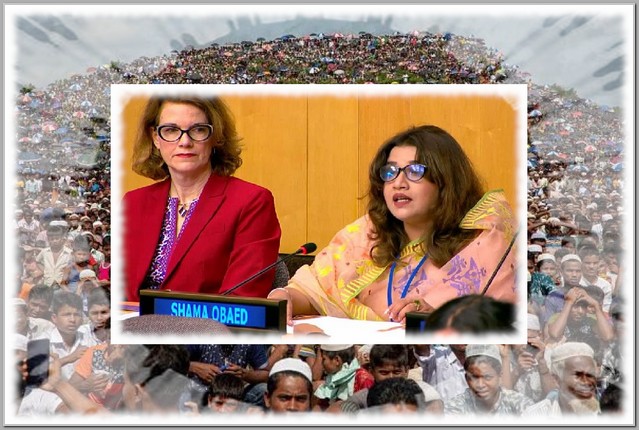
Bangladesh’s latest appeal at the United Nations reflects a broader effort to keep humanitarian protection and the Rohingya crisis high on the international agenda at a time when global attention is increasingly divided by multiple conflicts and emergencies. Speaking at the 2026 ECOSOC Humanitarian Affairs Segment, State Minister for Foreign Affairs Shama Obaed Islam underscored the need for stronger international action to protect civilians, uphold international humanitarian law, and ensure sustainable solutions for displaced populations.
The intervention highlights Bangladesh’s growing concern that humanitarian norms are facing unprecedented pressure amid ongoing conflicts worldwide. By calling for greater accountability for violations of international humanitarian law and increased investment in conflict prevention, Dhaka positioned itself as an advocate for a rules-based international order where civilian protection remains a central priority.
A significant aspect of the minister’s remarks was the continued emphasis on the Rohingya crisis. Nearly a decade after the mass displacement of Rohingyas from Myanmar, Bangladesh continues to host one of the world’s largest refugee populations. The government’s message remains consistent: voluntary, safe, dignified, and sustainable repatriation to Myanmar is the only long-term solution. By raising concerns over funding cuts affecting Rohingya women and girls, Bangladesh also sought to draw attention to the growing humanitarian burden faced by host communities and aid agencies.
The speech further reflected the changing nature of humanitarian challenges in the digital age. Shama Obaed Islam’s call for a global platform to address technology-enabled violence against women and girls indicates Bangladesh’s intention to broaden international discussions beyond traditional humanitarian concerns. Issues such as digital harassment, disinformation, and cyber abuse are increasingly being recognized as threats to social stability, human security, and gender equality.
The emphasis on women’s participation in peacebuilding and humanitarian operations aligns with Bangladesh’s long-standing support for inclusive approaches to conflict resolution and recovery. It also reinforces the country’s efforts to project itself as a constructive voice in international development and peace discussions.
Overall, Bangladesh’s message at the UN was both humanitarian and strategic. It sought to remind the international community that unresolved crises such as the Rohingya issue require sustained attention while advocating for stronger global mechanisms to address emerging humanitarian challenges in an increasingly complex world.