Special Correspondent, Dhaka:
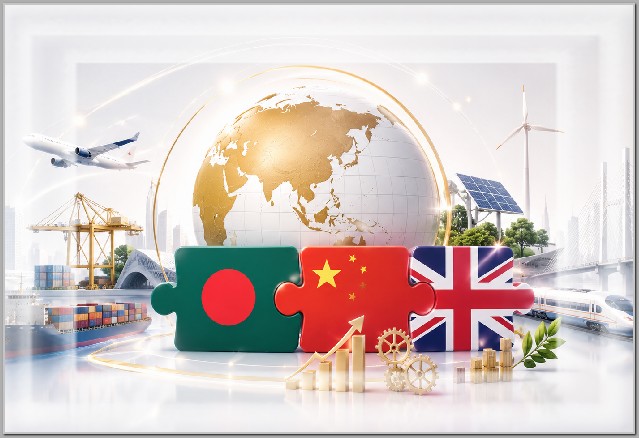
Prime Minister Tarique Rahman’s meetings with the Chinese and British ambassadors on the same day offer more than routine diplomatic engagement. Together, they reflect an emerging foreign policy and economic strategy aimed at attracting diversified investment, expanding trade partnerships, and positioning Bangladesh as a more influential player in regional and global economic networks.
The discussions between Prime Minister Tarique Rahman and Chinese Ambassador Yao Wen focused on expanding trade, investment, technical education, and people-to-people exchanges. Meanwhile, British High Commissioner Sarah Cooke expressed interest in future investment opportunities in Bangladesh’s aviation sector, particularly following the launch of the third terminal of Hazrat Shahjalal International Airport. Taken together, the two meetings illustrate how Bangladesh is seeking to leverage relationships with major global partners to support its next phase of economic growth.
Diversifying Economic Partnerships
One of the most significant aspects of the engagements is the emphasis on diversification. China remains one of Bangladesh’s largest trading partners and a major source of infrastructure financing and investment. The renewed focus on trade and investment cooperation suggests that both countries are looking to deepen economic ties beyond traditional infrastructure projects and move toward greater industrial collaboration, technology transfer, and human resource development.
At the same time, Bangladesh’s discussions with the United Kingdom indicate a parallel effort to attract Western investment, particularly in sectors that align with the country’s long-term development goals. The UK’s interest in aviation, vocational training, and technical education demonstrates confidence in Bangladesh’s economic potential and growing consumer market.
Aviation as a New Investment Frontier
The British interest in Bangladesh’s aviation sector is particularly noteworthy. The upcoming operationalization of the third terminal at Hazrat Shahjalal International Airport is expected to significantly enhance passenger and cargo handling capacity, creating new opportunities for foreign investment in airport services, logistics, maintenance, training, and related industries.
For Bangladesh, aviation is becoming more than a transportation sector. It is increasingly viewed as a catalyst for trade, tourism, investment, and regional connectivity. International interest in the sector signals recognition of Bangladesh’s strategic location between South Asia and Southeast Asia.
Human Capital at the Centre
A common theme in both meetings was technical education and skills development. China highlighted educational exchanges, while the UK proposed cooperation in technical and vocational training. This convergence reflects a growing understanding among Bangladesh’s partners that future economic growth will depend not only on infrastructure but also on a skilled workforce capable of supporting industrial upgrading and technological transformation.
Looking Ahead
The simultaneous engagement with China and the United Kingdom highlights Bangladesh’s increasingly balanced and pragmatic foreign policy. Rather than relying on a single partner, Dhaka appears focused on cultivating economic cooperation across multiple fronts. If translated into concrete investments and trade initiatives, this approach could strengthen Bangladesh’s economic resilience, create employment opportunities, and support the country’s ambition to become a more competitive middle-income economy in the coming decade.