Sagar Rahman, Dhaka:
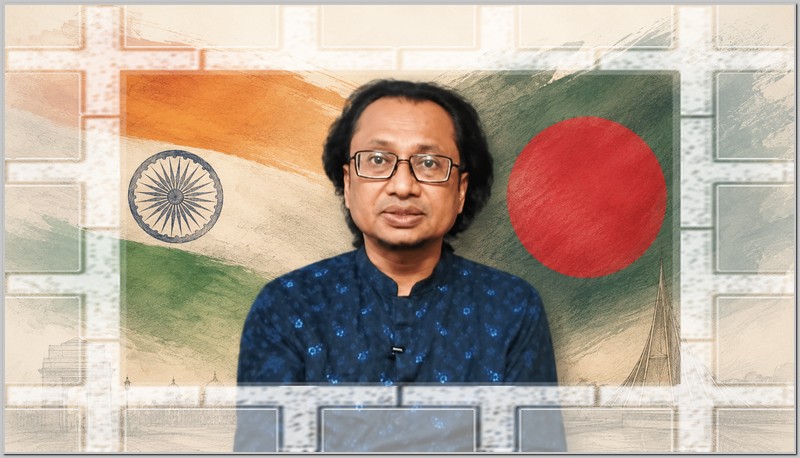
The unexpected hold-up involving Prime Minister’s Policy and Strategy Affairs Adviser Dr Zahed Ur Rahman at New Delhi’s Indira Gandhi International Airport has added a fresh layer of strain to already fragile Bangladesh-India relations, raising questions about diplomatic coordination and mutual trust between the two neighbors.
Zahed, who was travelling to India to attend the 28th Meeting of the Committee of Senior Officials (CSO) of the Indian Ocean Rim Association (IORA), was reportedly stopped by Indian immigration authorities upon arrival on Sunday. Although Indian media later reported that his name had appeared on a security-related watchlist and that he was eventually cleared to enter the country, the adviser chose not to proceed with his visit and instead returned home.
According to Bangladeshi diplomatic sources, Zahed was kept waiting for around two and a half hours and was questioned without being given a clear explanation. The episode was particularly notable because the Bangladesh High Commission in New Delhi had formally informed the Indian Ministry of External Affairs of his visit through a diplomatic note verbal before his arrival.
The incident comes at a time when relations between Dhaka and Delhi are already navigating a period of uncertainty. Since the political transition in Bangladesh, several developments—from border issues to diplomatic exchanges and trade-related concerns—have exposed differences between the two sides. Against this backdrop, the treatment of a senior adviser to the prime minister is likely to be viewed in Dhaka as more than a routine immigration matter.
While Indian authorities ultimately allowed Zahed to enter the country, the fact that a high-ranking Bangladeshi official was flagged despite prior diplomatic notification has sparked questions about communication gaps within the Indian system or, alternatively, a lack of sensitivity toward an official visitor from a neighboring country.
The presence of Bangladesh High Commissioner Riaz Hamidullah at the airport to receive the adviser further underscored the significance attached to the visit. That Zahed ultimately abandoned his trip despite receiving clearance suggests the experience had already crossed the threshold from procedural inconvenience to diplomatic discomfort.
From a broader perspective, the incident may not trigger a formal diplomatic dispute, but it risks reinforcing perceptions in Bangladesh that bilateral engagement is becoming increasingly complicated. Diplomatic relationships are often shaped as much by symbolism and protocol as by official agreements. Delays, detentions, or administrative obstacles involving senior officials can leave lasting impressions, regardless of the explanations that follow.
For India, which has repeatedly emphasized the importance of maintaining strong ties with Bangladesh, the episode could prove counterproductive. Even if the incident stemmed from an automated security alert or bureaucratic oversight, the optics are difficult to ignore, particularly when the official concerned was travelling to participate in a regional forum hosted by India itself.
Whether this episode remains an isolated incident or becomes another point of contention in an already sensitive relationship will depend largely on how both governments choose to address it in the coming days. For now, the Delhi airport episode has added another uncomfortable chapter to a relationship that has recently shown signs of growing friction beneath its traditionally cooperative framework.