Staff Correspondent, Dhaka:
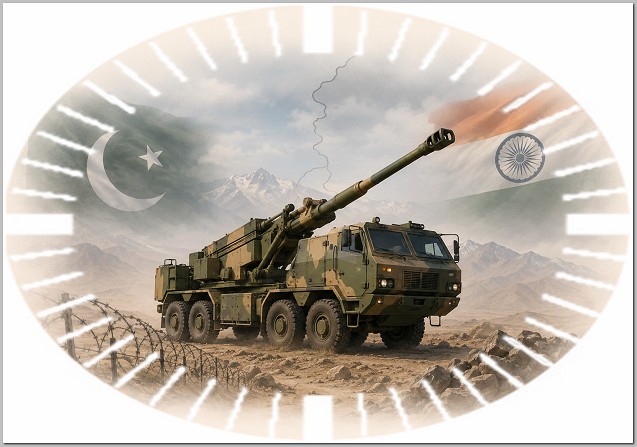
Pakistan’s deployment of Chinese-made SH-15 self-propelled artillery guns near the Indian border marks another step in the evolving military balance between the two nuclear-armed neighbors. While the move does not necessarily indicate an imminent conflict, it reflects Islamabad’s ongoing effort to modernize its conventional firepower and maintain deterrence amid regional security competition.
The SH-15, also known as the PCL-181 in China, is a 155mm, 52-calibre wheeled artillery system developed by Chinese defense manufacturer Norinco. Pakistan ordered 236 units in 2019, with deliveries beginning in 2022. According to reports, many of these guns have now been deployed in strategically important sectors facing India, including Gujranwala, Sialkot and Jalalpur Jattan, areas located behind the sensitive Shakargarh bulge.
The deployment highlights the growing defence partnership between China and Pakistan. More significantly, Islamabad has reportedly secured a transfer of technology agreement that will allow local production of the SH-15 at Heavy Industries Taxila. This could strengthen Pakistan’s long-term artillery capabilities while reducing dependence on imported systems.
The SH-15 offers a major improvement over Pakistan’s older artillery inventory. Its mobility, precision and ability to strike targets beyond 50 kilometers with rocket-assisted projectiles provide greater operational flexibility and stronger stand-off attack capabilities.
India, however, has also been rapidly upgrading its artillery forces. The induction of M777 ultra-light howitzers, K-9 Vajra self-propelled guns, Dhanush artillery and the upcoming Advanced Towed Artillery Gun System (ATAGS) reflects New Delhi’s focus on improving long-range firepower. India is also developing a wheeled Mounted Gun System that could eventually match the SH-15’s operational role.
Rather than shifting the military balance overnight, Pakistan’s latest deployment underscores an intensifying artillery modernization race in South Asia. As both countries continue investing in advanced conventional weapons, maintaining communication and confidence-building measures will remain essential to reducing the risk of miscalculation along one of the world’s most sensitive borders.