
Staff Correspondent, Dhaka:
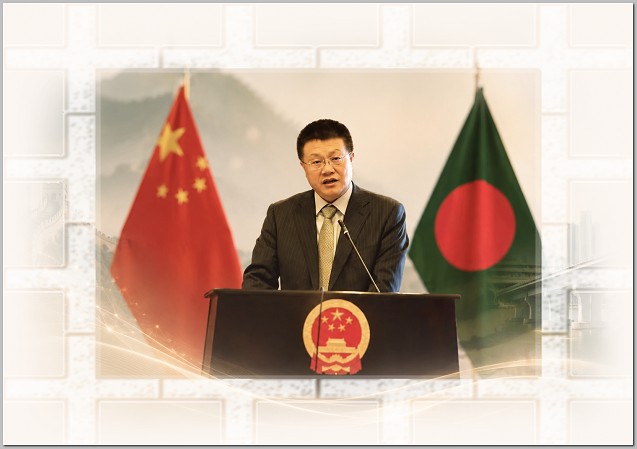
China has underlined the importance of political stability and effective governance as Bangladesh enters a new phase of economic and strategic development. Speaking at the 2026 Comparative Governance Forum in Dhaka, Chinese Ambassador Yao Wen said political unity, social stability and economic diversification remain essential for Bangladesh to sustain long-term growth. His remarks reflect Beijing’s broader vision of expanding cooperation beyond infrastructure and trade into governance and policy exchange.
The ambassador praised Prime Minister Tarique Rahman’s people-centered and pragmatic approach to governance, saying it has brought a fresh direction to the country’s administration. While the comments signal China’s confidence in Bangladesh’s current leadership, they also highlight Beijing’s belief that stable governance is critical for attracting investment and maintaining development momentum.
Yao Wen’s speech came shortly after the Prime Minister’s official visit to China, where both countries agreed to elevate their relationship to a “Bangladesh-China community with a shared future.” The move suggests that bilateral ties are entering a more strategic phase, covering governance, institutional cooperation and long-term development alongside traditional economic partnerships.
The ambassador also pointed to several major cooperation projects, including the comprehensive management of the Teesta River, the expansion of Mongla Port and progress on the China-Myanmar-Bangladesh Economic Corridor. These initiatives demonstrate China’s continued interest in strengthening regional connectivity while supporting Bangladesh’s infrastructure and economic ambitions.
Beyond investment, China’s message focused on Bangladesh’s internal challenges. Political unity and social stability were presented as foundations for sustainable development, while reducing dependence on a single export industry was identified as another key priority. These are issues that many economists believe will shape Bangladesh’s ability to maintain steady growth in an increasingly competitive global economy.
Overall, the forum highlighted a broader shift in Bangladesh-China relations. The partnership is gradually expanding from financing development projects to sharing governance experience and policy ideas. If translated into practical reforms, this cooperation could strengthen Bangladesh’s development capacity. However, Dhaka will also need to balance its deepening ties with China while preserving strong relations with other global and regional partners, ensuring its foreign policy remains diversified and strategically balanced.