
Staff Correspondent, Dhaka:
The United States has begun direct engagement with Myanmar’s military-backed authorities, signaling a significant adjustment in Washington’s approach to a country it has largely sought to isolate since the 2021 military takeover.
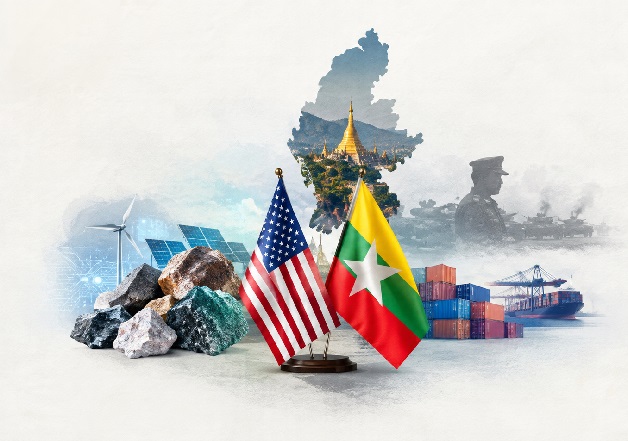
The renewed contact has been driven initially by practical security concerns, particularly efforts to dismantle scam networks operating from Myanmar and secure the release of detained US citizens. But the discussions have also opened space for broader strategic issues, including access to Myanmar’s deposits of heavy rare-earth minerals, which are important to industries ranging from electric vehicles to renewable energy.
US Assistant Secretary of State for Intelligence and Research Michael Vance met Myanmar’s leader Min Aung Hlaing in Naypyitaw in September. The meeting represented the highest-level US contact with Myanmar’s military leadership since the coup and indicates Washington’s willingness to communicate directly with authorities it continues to sanction.
The policy shift comes as the Trump administration places greater emphasis on immediate US interests and transactional diplomacy. Myanmar’s location and natural resources could give the country greater importance as Washington seeks to strengthen supply chains and reduce dependence on China.
However, engagement carries considerable complications. Much of Myanmar’s rare-earth production is located in areas controlled by ethnic armed groups, while the military remains engaged in a prolonged conflict with opposition forces. At the same time, the United States continues to accuse Myanmar’s military leadership of serious human rights abuses, including those associated with the Rohingya crisis.
Washington says dialogue with the military government does not mean abandoning contacts with democratic and ethnic groups. Nevertheless, the emerging approach could alter the balance between sanctions, diplomatic pressure, and strategic engagement.
The Myanmar opening therefore reflects a broader question for US foreign policy: whether limited engagement can secure concrete interests while maintaining pressure over the country’s political and humanitarian crisis.