Senior Correspondent, Dhaka:
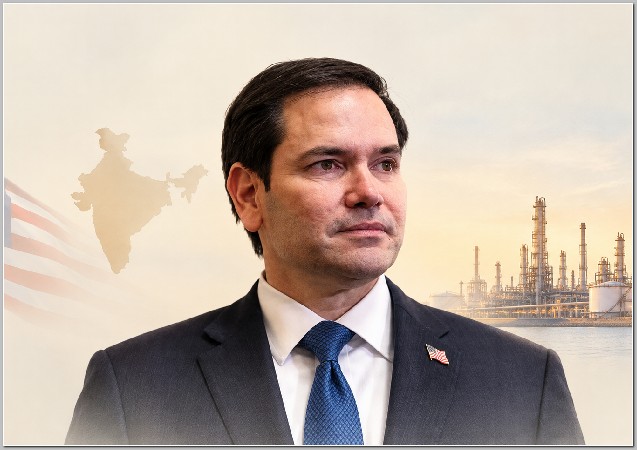
U.S. Secretary of State Marco Rubio’s planned visit to India from October 17 to 22 is expected to place energy cooperation, commercial investment, and strategic coordination at the center of Washington’s engagement with New Delhi.
The U.S. Department of State said on Tuesday that Rubio would travel to Mumbai and Jamnagar after visiting Samarkand, Uzbekistan, where he will attend the C5+1 Ministerial meeting with Central Asian countries.
In India, Rubio is expected to meet senior government officials to discuss the bilateral strategic partnership, regional and global developments, and prospects for expanded energy cooperation. Meetings with business leaders will also focus on commercial investment and economic ties.
The planned visit to Jamnagar carries particular significance because the city hosts Reliance Industries’ refinery complex, the world’s largest single-site refining facility, with a capacity of approximately 1.4 million barrels of crude oil per day. The stop could provide an opportunity to explore the commercial dimensions of U.S.-India energy engagement, although no specific agreements have been announced.
In March, U.S. President Donald Trump said the United States would build its first refinery in 50 years with investment from Reliance Industries. He put the proposed project’s cost at $300 billion and identified Brownsville, Texas, as its location. The project’s development and investment details remain important considerations in assessing its potential impact.
Rubio’s India visit will be his second since May, when he attended the Quad Foreign Ministers’ meeting in New Delhi.
In Samarkand, he will participate in the C5+1 framework involving Uzbekistan, Kazakhstan, Tajikistan, Turkmenistan, and Kyrgyzstan. A U.S. commercial delegation of more than 200 business leaders will accompany him, highlighting Washington’s parallel effort to expand economic engagement across Central Asia.
Taken together, the itinerary underscores the administration’s focus on linking diplomatic partnerships with energy security, investment, and broader regional economic cooperation.