
Senior Correspondent, Dhaka:
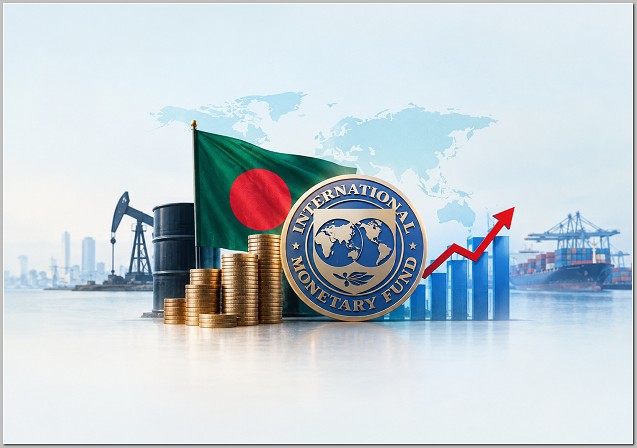
Bangladesh is seeking fresh financing from the International Monetary Fund (IMF) as escalating geopolitical tensions and rising energy costs create new risks for its economic stability. The negotiations underscore the government’s need to secure external financial support while managing the implications of its early exit from an existing IMF program.
Finance and Planning Minister Amir Khosru Mahmud Chowdhury confirmed that Bangladesh had held several meetings with the IMF on the sidelines of the IMF-World Bank Annual Meetings in Bangkok. Discussions are continuing, with another meeting expected shortly, although the minister did not disclose the size or terms of the proposed package.
Bangladesh entered a $4.7 billion IMF program in January 2023, which was subsequently expanded to $5.5 billion. The country received $3.8 billion in five tranches before the BNP-led government decided in May 2026 to leave the program eight months before its scheduled expiry. The government later applied for a fresh package.
The latest initiative comes as external pressures complicate Bangladesh’s economic outlook. The country’s dependence on imported energy leaves it vulnerable to international price fluctuations, which can increase import expenditure, intensify pressure on foreign exchange reserves, and widen fiscal constraints. Fresh IMF financing could help provide a buffer, although the extent of relief would depend on the package’s size, conditions, and disbursement schedule.
The government plans to seek around $4 billion in budget support from multilateral and bilateral development partners in the 2026-27 fiscal year, according to Prime Minister’s Adviser on Finance and Planning Rashed Al Mahmud Titumir. Finance Minister Khosru also indicated that future cooperation with the World Bank would be pursued under a proposed partnership framework, including support to address energy-related pressures.
However, access to external financing alone would not resolve the underlying vulnerabilities. The effectiveness of any new assistance will depend on how Bangladesh manages energy costs, fiscal pressures, and external-sector risks while maintaining economic stability.
At the annual meetings, IMF Managing Director Kristalina Georgieva said investment in artificial intelligence infrastructure was helping sustain global growth at around 3 percent, even as energy supply disruptions weighed on the outlook. Her remarks highlighted the competing forces shaping the global economy, against which Bangladesh must navigate its financing needs and development priorities.