Sagar Rahman, Dhaka:
The electoral victory of the Bharatiya Janata Party (BJP) in West Bengal introduces a complex mix of opportunity and uncertainty for Bangladesh, particularly at a time when Dhaka–New Delhi relations are undergoing cautious recalibration.
The contest, framed around rivalry between Chief Minister Mamata Banerjee and Prime Minister Narendra Modi, carries implications beyond domestic politics. While state elections remain an internal matter for India, West Bengal’s geographic and political centrality makes the outcome highly relevant for Bangladesh. The state accounts for more than half of the bilateral land border, shaping trade routes, migration flows, and cross-border narratives.
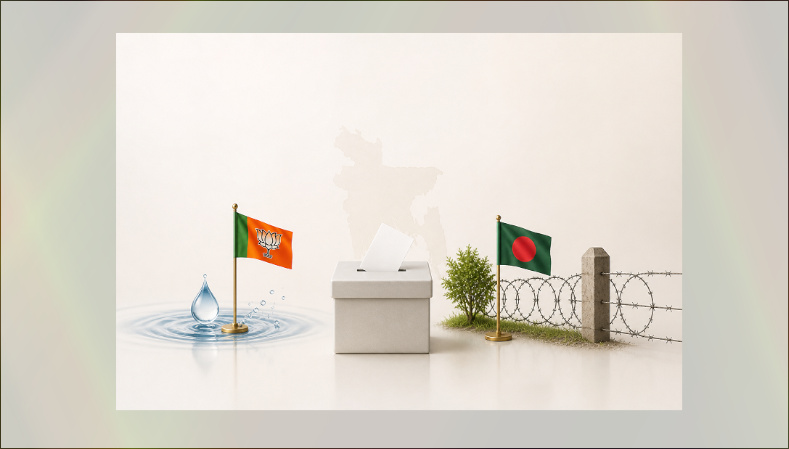
From Dhaka’s perspective, one potential benefit lies in improved coordination between the state and India’s central government under BJP leadership. This could help revive stalled negotiations, particularly over the Teesta River water-sharing agreement, which has remained unresolved since 2011 due to opposition from the previous state administration. With the Ganges Water Sharing Treaty set to expire in December 2026, renewed momentum on water diplomacy could become increasingly important.
However, these possibilities are balanced by concerns over border governance. The BJP’s focus on “infiltration” as a political issue may lead to stricter enforcement along the frontier. Reports of forced cross-border movements without proper verification have already raised humanitarian and diplomatic concerns. For Bangladesh, such developments risk increasing tensions and complicating border management.
Trade and connectivity present a mixed outlook. Greater alignment between state and central authorities could ease logistical barriers and support economic exchange. At the same time, political sensitivities may limit progress. Despite recent disruptions, bilateral trade has remained resilient, highlighting the underlying strength of economic ties.
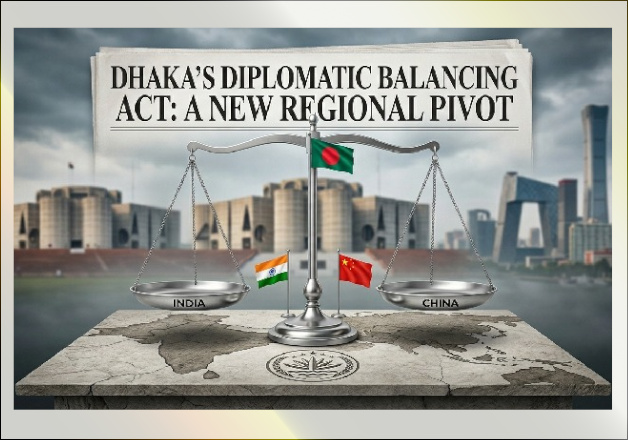
The broader diplomatic context also shapes the outlook. Following the 2024 political transition in Bangladesh—marked by the removal of Sheikh Hasina and subsequent interim leadership under Muhammad Yunus, before the electoral return of the Bangladesh Nationalist Party in 2026—relations with India faced strain. Although recent engagements suggest gradual improvement, mutual trust remains limited.
Ultimately, the implications of the West Bengal election will depend on developments in the months ahead. Border management, water-sharing negotiations, trade flows, and political messaging will play a more decisive role than the election result itself. For Bangladesh, careful engagement will be essential as it navigates both opportunities and emerging challenges in its relationship with India.