Sagar Rahman, Dhaka:
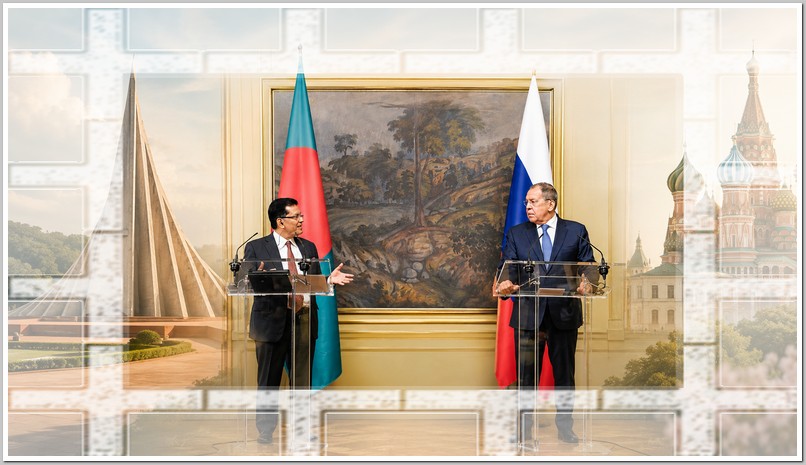
Bangladesh’s renewed effort to secure membership in BRICS and the Shanghai Cooperation Organization (SCO), backed by a positive response from Russia, reflects a broader strategic recalibration of Dhaka’s foreign policy amid a rapidly evolving global order. Foreign Minister Dr. Khalilur Rahman’s discussions with Russian Foreign Minister Sergey Lavrov in Moscow were not merely about joining two international blocs; they underscored Bangladesh’s desire to diversify its diplomatic and economic partnerships beyond traditional frameworks.
At a time when geopolitical competition is reshaping global institutions, BRICS and the SCO have emerged as influential platforms representing the interests of emerging economies and the Global South. Bangladesh’s interest in these organizations aligns with its ambition to secure a greater voice in global governance, expand economic opportunities, and reduce dependence on a limited set of strategic partners. The positive Russian response indicates that Moscow sees value in deeper engagement with Bangladesh as it seeks to strengthen partnerships across Asia amid ongoing tensions with the West.
The timing of Dhaka’s renewed membership push is significant. Bangladesh is preparing for its graduation from the Least Developed Country (LDC) category in 2026, which will require the country to secure new trade arrangements and investment sources. Khalilur’s request for Russian support in concluding a free trade agreement with the Eurasian Economic Commission (EEC) highlights the economic dimension of this diplomatic outreach. Access to larger markets and alternative trade frameworks could help Bangladesh navigate post-LDC challenges and maintain export competitiveness.
The discussions also reinforced the growing strategic importance of Bangladesh-Russia relations. The Rooppur Nuclear Power Plant remains the flagship symbol of this partnership, demonstrating how cooperation has expanded beyond traditional diplomacy into critical infrastructure and energy security. With both units expected to contribute significantly to Bangladesh’s electricity generation capacity, the project has become a cornerstone of long-term bilateral engagement.
Beyond economics and energy, the talks revealed a widening agenda that includes defense, technology, agriculture, education, and labor mobility. Bangladesh’s invitation for Russian investment in special economic zones and high-tech parks suggests that Dhaka is seeking to attract capital and technology from a broader range of partners while maintaining its traditionally balanced foreign policy.
As Bangladesh and Russia prepare to celebrate 55 years of diplomatic relations in 2027, the Moscow meeting signals that both countries are looking beyond symbolic ties toward concrete strategic outcomes. Whether Dhaka ultimately secures BRICS and SCO membership will depend on broader geopolitical dynamics, but its pursuit reflects a clear objective: positioning Bangladesh as a more influential and diversified actor in an increasingly multipolar world.