AIP Wire Report Analysis:
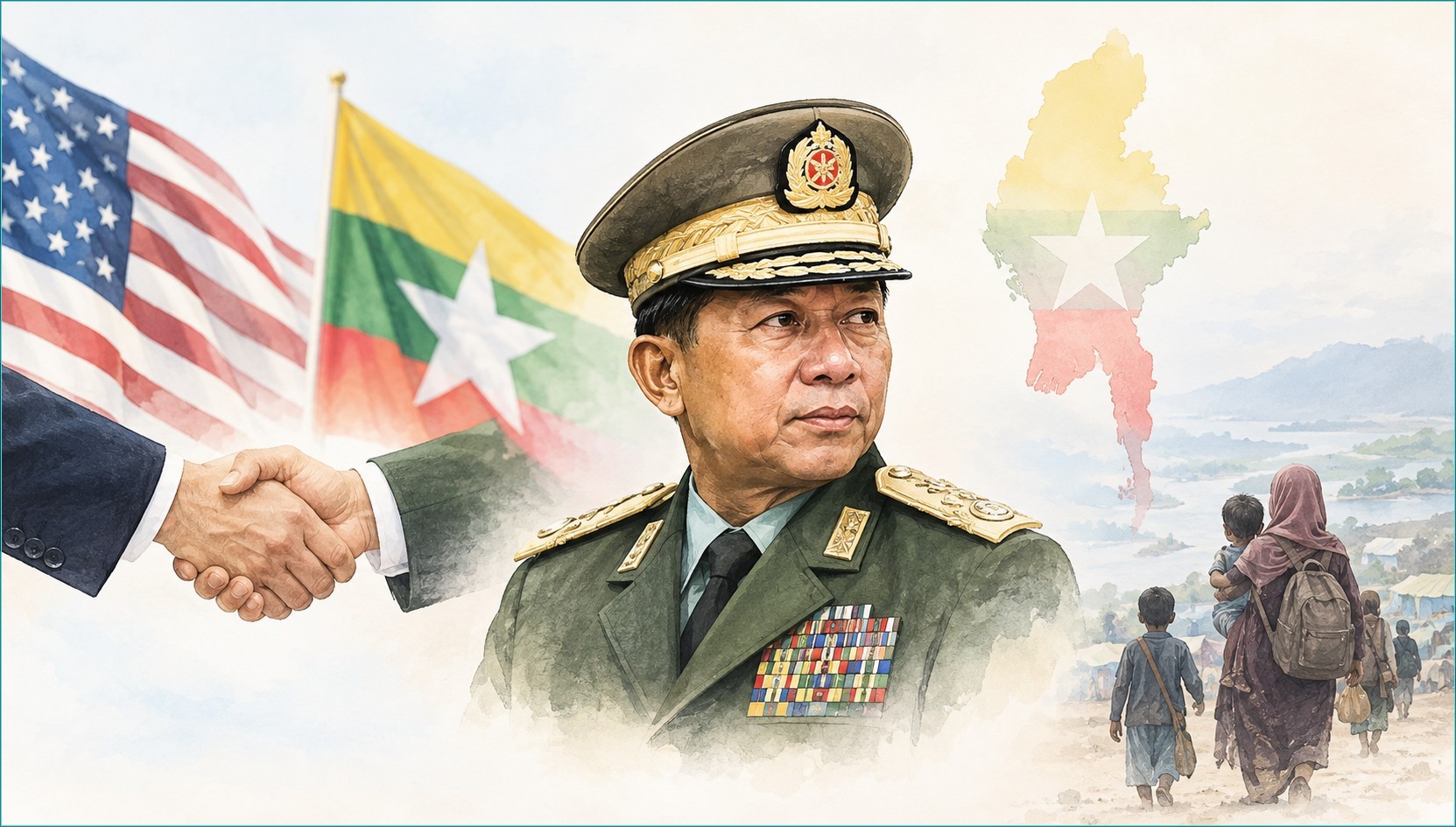
Anwar Shahadat, New York—The United States has renewed diplomatic engagement with Myanmar’s military-backed leadership, raising questions about Washington’s priorities in Southeast Asia and the potential implications for democracy, human rights, and the long-running Rohingya refugee crisis in neighboring Bangladesh.
The latest development came in October, when U.S. and Myanmar representatives held a second round of talks in Tokyo within a month. According to Reuters, the meeting followed discussions in Myanmar’s capital, Naypyitaw, in September. The renewed contact marks a significant shift from Washington’s efforts to isolate the country’s military leadership following the 2021 coup.
Myanmar occupies a strategically important position in Southeast Asia. It shares a border with China and has a coastline along the Bay of Bengal, which connects to the wider Indian Ocean region. These geographic factors make the country relevant to the strategic interests of major powers, including the United States.
However, Washington’s engagement with Myanmar also presents a political dilemma. The United States has imposed sanctions on senior military figures over human rights abuses, including the persecution of Rohingya Muslims. Direct talks with the military-backed authorities raise questions about how Washington will balance its democratic principles with its diplomatic and strategic interests.
According to Reuters, the September discussions focused on efforts to secure the release of an American businessman and shut down scam operations targeting Americans. Access to Myanmar’s rare-earth mineral deposits may also be part of the broader strategic picture, although the precise subjects discussed during the October meeting have not been publicly established. The U.S. State Department has said its engagement is intended to achieve practical results, particularly in addressing transnational crime.
These priorities matter because Myanmar’s scam operations and mineral resources involve wider regional and international interests. Rare-earth elements are used in products ranging from electric vehicles to wind turbines. However, Reuters reported that many of Myanmar’s deposits are located in territory controlled by ethnic armed groups fighting the military, creating substantial obstacles to any potential U.S. access. The talks therefore involve practical security concerns as well as broader strategic calculations.
The democratic question remains unresolved. On October 19, Myanmar’s military-backed government released rare photographs of imprisoned former leader Aung San Suu Kyi, who was detained after the 2021 military coup. The images offered a rare glimpse of the former leader but did not, by themselves, signal a broader political opening or resolve concerns about her detention.
The implications of Washington’s renewed engagement extend beyond Myanmar’s domestic politics. Bangladesh continues to host a large Rohingya refugee population, including people who fled persecution and violence in Myanmar. Their safe, voluntary, and dignified return remains a major challenge, with continuing conflict and insecurity obstructing progress.
A recent warning from the Independent Investigative Mechanism for Myanmar reinforces the seriousness of the situation. Following a visit to Bangladesh, the mechanism’s head said on October 12 that the targeting of civilians amid the ongoing conflict in Rakhine State was preventing Rohingya refugees from safely returning home. The mechanism is investigating allegations of serious international crimes committed by perpetrators from different ethnic, religious, and political backgrounds.
This development highlights the gap between diplomatic engagement and the conditions required for repatriation. Even if Washington establishes more direct communication with Myanmar’s leadership, refugees cannot return safely without meaningful improvements in security and protection in their places of origin.
For Bangladesh, the direction of U.S. policy toward Myanmar therefore matters. Renewed diplomatic access could give Washington an opportunity to raise the treatment and rights of the Rohingya directly with the authorities. However, there is no public indication that the latest talks have produced specific commitments on the refugee crisis. Nor is there any guarantee that human rights concerns will receive the same attention as U.S. interests in transnational crime and strategic resources.
The central question is whether Washington can translate renewed contact into meaningful influence over Myanmar’s conduct, including conditions for the Rohingya, or whether engagement will proceed mainly around immediate security and economic priorities.
For Bangladesh and the wider region, a lasting solution cannot rest on diplomatic statements alone. It will require conditions in Myanmar that allow refugees to return safely and voluntarily, with their fundamental rights protected. Accountability for abuses and credible safeguards against renewed persecution will also remain important to any sustainable outcome.
For now, the consequences of Washington’s renewed engagement remain uncertain. The second round of talks demonstrates that communication is continuing, but the precise outcome of the October meeting has not been publicly established. The significance of this policy shift will ultimately depend on whether it produces measurable progress—not only on issues directly affecting Americans, but also on Myanmar’s political future, human rights, and the conditions facing the Rohingya.