Sadik Sagar, Dhaka:
The growing international interest in ground handling operations at the third terminal of Hazrat Shahjalal International Airport (HSIA) reflects more than a commercial opportunity—it highlights Bangladesh’s emergence as an increasingly attractive destination for global aviation investment.
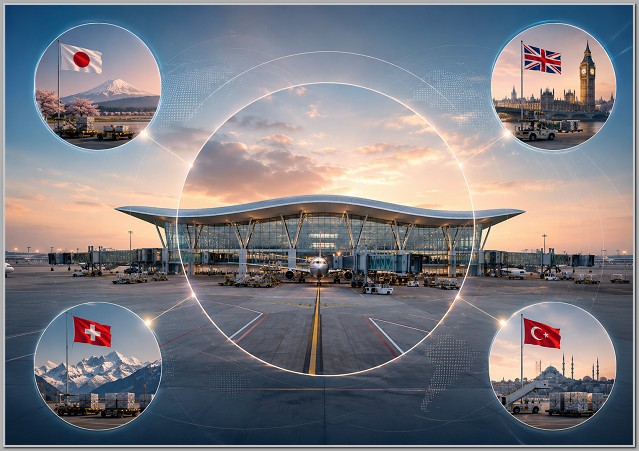
With companies and stakeholders from Japan, the United Kingdom, Switzerland and Turkey expressing interest in participating in ground handling services, the newly built third terminal is becoming a focal point of international attention. The latest expression of interest from Swiss aviation services giant Swissport adds further momentum to what appears to be a competitive race for involvement in one of Bangladesh’s most significant infrastructure projects.
At the heart of this interest lies the strategic importance of the third terminal. Designed to substantially increase passenger and cargo handling capacity, the facility is expected to transform Dhaka into a more efficient regional aviation hub. For international ground handling operators, the terminal represents access to a fast-growing aviation market supported by rising passenger demand, expanding trade flows and increasing connectivity.
Ground handling services are often overlooked by the public, yet they are critical to airport efficiency. From baggage management and aircraft servicing to passenger assistance and cargo operations, the quality of ground handling directly influences airline performance and passenger experience. As Bangladesh seeks to elevate HSIA to international standards, attracting experienced global operators could help improve operational efficiency, safety and service quality.
The interest shown by Swissport is particularly noteworthy. As one of the world’s leading aviation service providers, its involvement would bring international expertise, advanced operational systems and global best practices. Similar interest from Japan, the UK and Turkey suggests that foreign aviation companies view Bangladesh as a market with long-term growth potential.
The development also carries broader economic implications. Increased foreign participation in airport services can encourage technology transfer, workforce training and investment in aviation-related infrastructure. It may also strengthen confidence among international airlines considering expanding operations in Bangladesh.
However, the government’s response indicates that competition for the opportunity will likely be based on formal proposals and commercial considerations. By inviting Switzerland to submit a formal offer while assuring fair evaluation, authorities appear keen to maintain a transparent and competitive process.
Beyond commercial interests, the discussions underscore the evolving nature of Bangladesh’s international partnerships. Aviation cooperation is increasingly becoming a component of broader economic diplomacy, linking trade, tourism, investment and connectivity.
As Bangladesh prepares to fully operationalize the third terminal, international interest from multiple countries serves as a strong vote of confidence in the country’s aviation future. The challenge now will be ensuring that this interest translates into partnerships that not only improve airport operations but also support Bangladesh’s broader ambition of becoming a regional transport and logistics hub.