Special Correspondent, Dhaka:
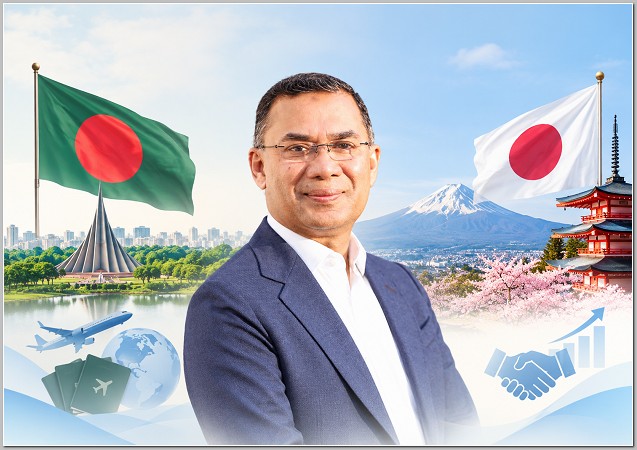
Prime Minister Tarique Rahman’s planned visit to Japan from October 26 to 29 is expected to place labor migration, investment, and strategic cooperation at the center of Bangladesh-Japan relations, with a proposed manpower agreement emerging as a potential key outcome.
The four-day official visit, at the invitation of Japanese Prime Minister Sanae Takaichi, will include bilateral talks in Tokyo and an expected meeting with Emperor Naruhito. The discussions come as Dhaka seeks to convert its longstanding partnership with Tokyo into expanded employment opportunities and stronger economic engagement.
Officials and diplomatic sources said several agreements and memorandums of understanding are under consideration ahead of the visit. An agreement on sending Bangladeshi workers to Japan is reportedly at an advanced stage of negotiations, although its signing will depend on whether the two sides reach a final consensus.
The proposed deal carries particular significance as Japan faces growing demand for foreign workers while Bangladesh seeks to diversify overseas employment destinations. Japan announced plans last year to recruit at least 100,000 Bangladeshi workers over five years, creating an opportunity for Dhaka to expand its presence in the Japanese labor market.
The two countries signed two memorandums of understanding in Tokyo in May 2025 to develop skilled manpower for Japanese employers. Bangladesh has since pursued expanded Japanese-language and technical training while establishing a dedicated Japan Cell under the Ministry of Expatriates’ Welfare and Overseas Employment to facilitate recruitment.
Employment opportunities are available through Japan’s Technical Intern Training Program, the Specified Skilled Worker scheme, and professional employment categories. However, translating recruitment targets into actual placements will require stronger skills development, effective recruitment procedures, and closer coordination between the two governments and employers.
Tarique has also prioritized labor-market access in bilateral engagement. During a meeting with a special adviser to the Japanese prime minister in July, he called for increased recruitment of skilled Bangladeshi workers and greater Japanese cooperation in skills development and investment.
Beyond manpower, the upcoming talks are expected to cover trade, energy cooperation, and Japanese investment. Japan remains a major development partner, with a substantial role in Bangladesh’s infrastructure development.
The visit could therefore help broaden bilateral relations beyond development assistance towards employment, investment, and strategic economic cooperation. Its practical significance, however, will depend on whether discussions produce concrete agreements, clearer recruitment pathways, and measurable progress in expanding opportunities for Bangladeshi workers.