Special Correspondent, Dhaka:
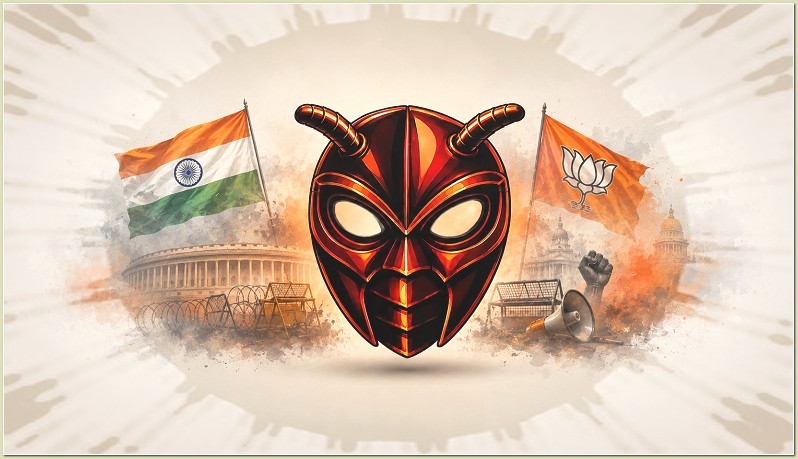
A series of protests unfolding across India has evolved beyond isolated domestic issues, prompting broader questions about whether prolonged political unrest in South Asia’s largest country could have implications for the wider region.
The demonstrations stem from multiple grievances, including allegations surrounding the NEET examination paper leak, activist Sonam Wangchuk’s hunger strike, and renewed farmers’ opposition to aspects of a proposed India-U.S. trade agreement. While each movement reflects different concerns, together they have intensified debate over governance, public accountability, and policymaking in Prime Minister Narendra Modi’s government.
Although the protests remain an internal matter for India, analysts note that developments in the country are closely watched across South Asia due to India’s central role in regional politics and economics. As the region’s largest economy and a key diplomatic actor, political uncertainty in India can influence regional perceptions, investment confidence, and cross-border cooperation.
Neighboring countries such as Bangladesh, Nepal, Bhutan, Sri Lanka, and Pakistan maintain varying degrees of economic and political engagement with India. While there is no immediate indication that the current unrest will disrupt bilateral relations, prolonged domestic instability could slow regional initiatives, delay trade and connectivity projects, or divert New Delhi’s attention from broader diplomatic priorities.
The developments also come at a time when South Asia faces a range of shared challenges, including economic recovery, climate resilience, border management, and regional connectivity. Should domestic political pressures intensify, India’s ability to lead or participate actively in regional cooperation could face additional constraints, at least in the short term.
At the same time, observers caution against drawing direct links between domestic protests and regional instability. India has experienced significant protest movements in the past while maintaining continuity in governance and foreign policy. Much will depend on how the government responds to public concerns and whether dialogue helps ease tensions in the weeks ahead.
For neighboring countries, the situation is less about immediate diplomatic consequences than about monitoring developments in a country whose political and economic trajectory continues to shape the broader South