Special Correspondent, Dhaka:
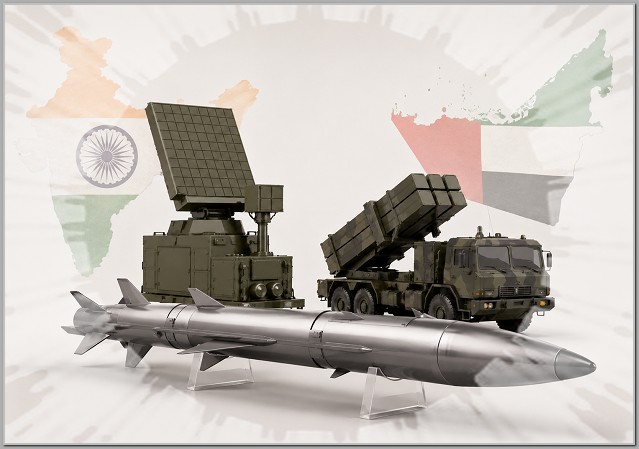
India’s reported discussions with the United Arab Emirates over the potential sale of the BrahMos supersonic cruise missile and the Akashteer air defense system underscore the growing strategic convergence between New Delhi and Abu Dhabi amid evolving security dynamics in the Middle East.
According to a Reuters report citing Indian sources, negotiations remain at an early stage but are progressing rapidly. If finalized, the deal would mark another milestone in India’s transformation from one of the world’s largest arms importers into an increasingly significant defense exporter.
The discussions come at a time when Gulf states are reassessing their security requirements following regional conflicts and growing concerns about missile and drone threats. The UAE’s interest in strengthening its defense capabilities reflects broader efforts to improve preparedness against emerging security challenges and safeguard critical infrastructure, including maritime routes linked to energy exports through the Strait of Hormuz.
For India, the potential sale carries significance beyond commercial value. The BrahMos missile, jointly developed with Russia, has become a flagship symbol of India’s indigenous defense manufacturing ambitions. Successful exports would strengthen New Delhi’s position in the global defense market and support its long-term objective of expanding strategic influence through defense partnerships.
The proposed inclusion of the Akashteer system is equally notable. Unlike conventional missile systems, Akashteer serves as a networked air-defense management platform capable of integrating information from multiple sensors and weapons. Its export would demonstrate growing confidence in India’s ability to offer advanced military technologies beyond traditional hardware.
The development also reflects changing geopolitical calculations in the Gulf. The UAE has traditionally relied on Western suppliers, particularly the United States, for major defense acquisitions. However, Abu Dhabi has increasingly sought to diversify procurement sources to enhance strategic flexibility and reduce dependence on any single supplier. India’s growing technological capabilities and close political ties with the UAE make it an attractive partner in this context.
From a regional perspective, deeper India-UAE defense cooperation may signal broader shifts in strategic alignments. Analysts note that security partnerships are increasingly intertwined with economic and political relationships, as countries seek to balance competing regional interests. Enhanced defense ties could also reinforce India’s broader engagement with the Gulf, a region critical for energy security, trade and expatriate communities.
At the same time, any BrahMos export would require Russian approval due to the missile’s joint development framework. While analysts believe such approval is likely, the process highlights the complex international dimensions of modern defense cooperation.
Whether or not the deal ultimately materializes, the negotiations illustrate India’s emergence as a more influential defense supplier and the UAE’s pursuit of a diversified security strategy in an increasingly uncertain regional environment.