Senior Correspondent, Dhaka:
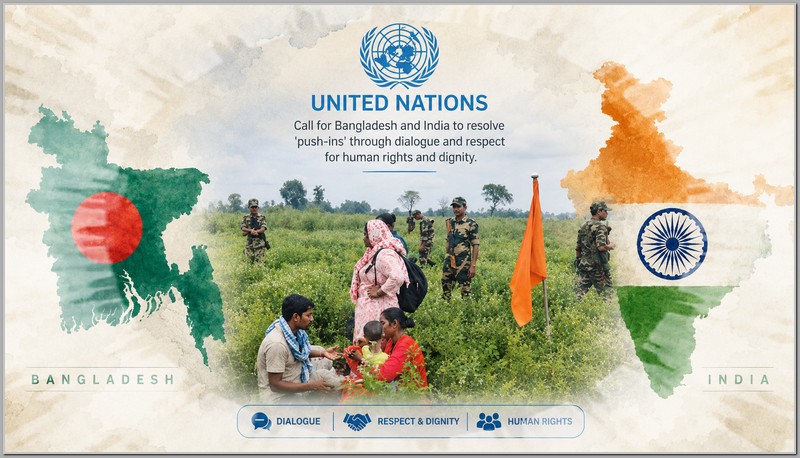
The United Nations’ recent appeal to Bangladesh and India to address the issue of cross-border “push-ins” through dialogue and respect for human rights highlights the growing sensitivity of the matter and its potential implications for bilateral relations. While border management and migration have long been challenging issues between the two neighbors, the latest developments have drawn international attention due to the humanitarian concerns surrounding those affected.
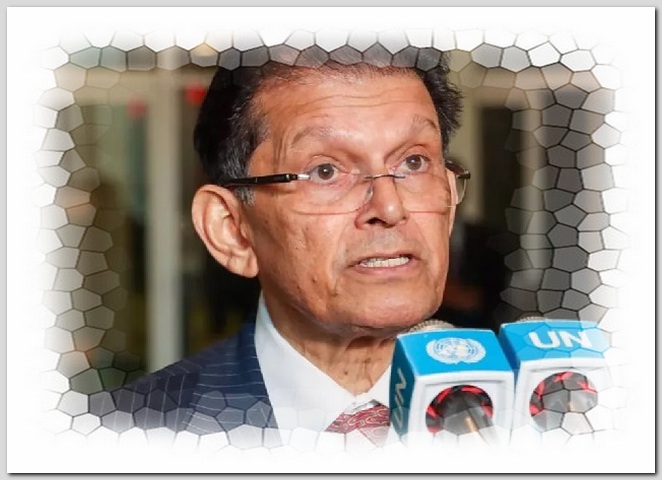
Speaking at a regular press briefing in New York, UN Secretary-General spokesperson Stéphane Dujarric emphasized that both countries should work through the issue with “full respect for people’s human rights and human dignity.” His remarks came in response to concerns about women and children reportedly stranded near the border in difficult conditions, lacking adequate food, shelter, and security.
The UN’s intervention is notable because it frames the issue not only as a matter of border control but also as a humanitarian challenge. This approach reflects a broader international expectation that migration-related disputes should be managed through legal processes and bilateral cooperation while ensuring the protection of vulnerable individuals.
According to Bangladesh’s Home Minister Salahuddin Ahmed, the Border Guard Bangladesh (BGB) has prevented 36 push-in attempts by India’s Border Security Force (BSF) since the West Bengal Assembly elections. He also informed parliament that 2,369 people have been pushed into Bangladesh since August 2024. These figures suggest that the issue has become a recurring concern rather than an isolated border incident.
The situation has gained further prominence following allegations by Human Rights Watch (HRW), which accused Indian authorities of forcibly expelling ethnic Bengali residents, most of them Muslims, without due process. The rights organization claimed that several families were left stranded at the border after attempts by Bangladeshi authorities to prevent entry. HRW has called on India to ensure proper citizenship verification procedures and to avoid unlawful expulsions.
Beyond the humanitarian dimension, the issue carries diplomatic significance. Bangladesh has consistently maintained that individuals identified for repatriation should undergo proper nationality verification through established channels before being transferred across the border. Any perception of unilateral action risks creating tensions and undermining trust between the two countries.
At the same time, India faces domestic pressures related to migration management and border security, particularly in politically sensitive regions such as West Bengal. These internal dynamics may influence policy decisions, making the issue more complex than a simple bilateral disagreement.
The UN’s carefully balanced statement avoids assigning blame while encouraging cooperation and dialogue. This suggests that the international community views constructive engagement as the most effective path forward. As both countries continue to deepen cooperation in trade, connectivity, energy, and regional security, managing border-related concerns through transparent and coordinated mechanisms will be important for preserving the broader relationship.
Ultimately, the current situation underscores the need for stronger communication, verified repatriation procedures, and a humanitarian approach that balances national security concerns with the rights and dignity of affected individuals.