
Senior Correspondent, Dhaka:
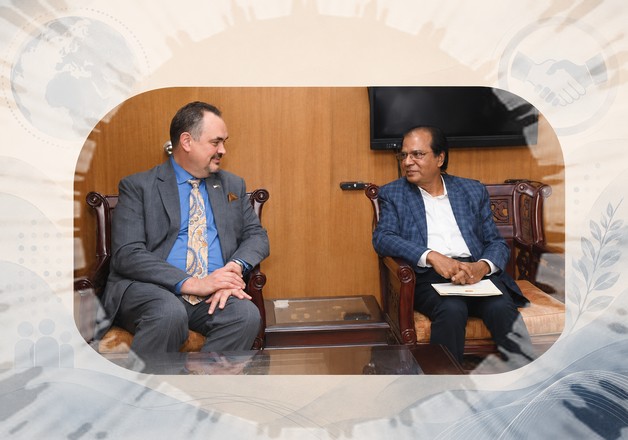
As climate risks, humanitarian pressures and regional security challenges become increasingly interconnected, disaster management is emerging as a significant pillar of US-Bangladesh engagement. The meeting between US Ambassador Brent T. Christensen and Disaster Management and Relief Minister Asadul Habib Dulu reflects a broader evolution in bilateral relations, where cooperation is expanding beyond traditional development assistance toward long-term resilience building, humanitarian preparedness and strategic partnership.
The discussions on disaster risk reduction, post-earthquake rescue operations, humanitarian assistance and sustainable development suggest that both countries are seeking to institutionalize cooperation in areas that directly impact human security. For Bangladesh, one of the world’s most disaster-prone nations, enhanced collaboration with the United States offers an opportunity to strengthen preparedness capabilities and improve resilience against increasingly complex climate and environmental threats.
The ambassador’s commitment to deepen cooperation in disaster management carries significance beyond immediate humanitarian concerns. It signals Washington’s growing recognition of Bangladesh’s strategic importance in addressing climate vulnerability and regional stability. As climate change intensifies the frequency and severity of natural disasters across South Asia, investments in disaster preparedness are becoming an essential component of sustainable development and national security.
Minister Dulu’s call for joint research on emerging forms of disasters is particularly noteworthy. Bangladesh is facing a new generation of risks driven by climate change, rapid urbanization and environmental stress, requiring innovative solutions rather than conventional disaster-response mechanisms. Collaboration in research, technology transfer and capacity building could help Bangladesh move from reactive disaster management toward a more proactive and science-based resilience framework.
The discussion also highlighted the continued importance of the Rohingya crisis in Bangladesh’s diplomatic agenda. By seeking US support for the safe and sustainable repatriation of forcibly displaced Rohingyas to Myanmar, Dhaka connected humanitarian cooperation with a broader regional challenge that remains unresolved. This demonstrates how disaster management, humanitarian assistance and geopolitical concerns are increasingly intertwined.
Equally important was the ambassador’s optimism regarding future bilateral relations. At a time when Bangladesh and the United States are exploring new avenues of cooperation, disaster resilience offers a practical and politically constructive platform for deepening engagement. Unlike more contentious areas, disaster preparedness provides common ground where both countries share clear interests and tangible objectives.
Ultimately, the meeting points to an emerging reality: disaster cooperation is no longer merely a humanitarian issue but a strategic one. If translated into concrete projects, training programmes and institutional partnerships, the evolving US-Bangladesh collaboration could strengthen Bangladesh’s resilience against future crises while reinforcing a bilateral relationship increasingly shaped by shared challenges and long-term development goals.