Staff Correspondent, Dhaka:
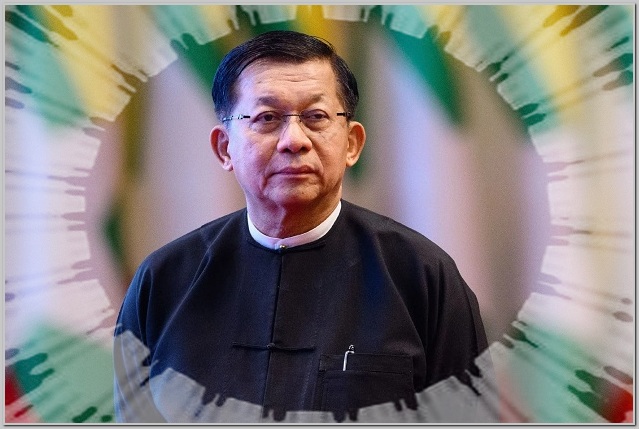
Myanmar junta chief and self-appointed President Min Aung Hlaing’s visit to China immediately after his trip to India highlights a calculated diplomatic effort to strengthen regional legitimacy and secure economic and political support at a time when his regime remains isolated from much of the international community.
Invited by Chinese President Xi Jinping, Min Aung Hlaing departed Naypyitaw on Monday accompanied by senior ministers and the chief ministers of Kachin and Shan states—two strategically important regions bordering China and home to major Chinese investments. The composition of the delegation suggests that economic and security issues, rather than ceremonial diplomacy, will dominate the agenda.
The visit comes at a critical moment for Myanmar. More than five years after the military seized power, the junta continues to face armed resistance across large parts of the country. Several ethnic armed organizations and anti-junta forces have made significant gains, particularly in northern Shan State near the Chinese border. Stability in these areas is a priority for Beijing, which seeks to protect cross-border trade, infrastructure projects and broader strategic interests under the China-Myanmar Economic Corridor (CMEC), a key component of the Belt and Road Initiative.
By bringing officials from Kachin and Shan states, Min Aung Hlaing appears keen to reassure Beijing that his administration remains committed to safeguarding Chinese investments, including border trade routes, rare earth mining operations and the long-delayed Myitsone Hydropower Project. China, meanwhile, is likely to press the junta to maintain stability in border regions and prevent disruptions that could threaten its economic interests.
The timing of the visit is equally significant. Min Aung Hlaing’s recent trip to India signaled an effort by the junta to diversify its diplomatic engagements beyond its traditional partners. India, which shares a long border with Myanmar and has security concerns related to insurgent activities and regional connectivity projects, continues to engage pragmatically with the military government despite international criticism.
Taken together, the India and China visits demonstrate the junta’s strategy of leveraging Myanmar’s geopolitical importance between Asia’s two largest powers. Rather than choosing sides, the regime appears intent on maintaining working relationships with both Beijing and New Delhi to reduce diplomatic isolation and attract economic cooperation.
For China, the visit offers an opportunity to reinforce its influence in Myanmar at a time of growing uncertainty. For Min Aung Hlaing, it represents a chance to secure political recognition and economic assurances from the country’s most influential external partner.
The broader message is clear: despite ongoing domestic conflict and limited acceptance from Western governments, Myanmar’s military leadership is seeking to strengthen its regional standing through engagement with neighboring powers whose strategic interests often outweigh concerns over political legitimacy.