Sadik Sagar, Dhaka:
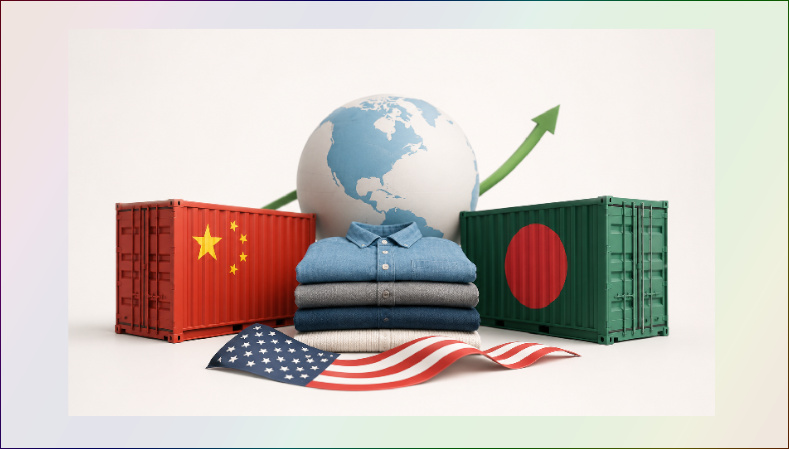
Bangladesh has overtaken China as the second-largest apparel supplier to the United States in the first quarter of 2026, marking a symbolic shift in the global garment trade. But beneath the headline achievement lies a more fragile reality shaped less by Bangladesh’s export strength and more by the rapid erosion of China’s access to the US market.
According to data from the Office of Textiles and Apparel (OTEXA), Bangladesh exported $2.04 billion worth of apparel to the US between January and March, despite recording an 8.38 percent decline in shipments. China’s exports, however, collapsed by nearly 53 percent to $1.69 billion following aggressive reciprocal tariffs imposed under the Trump administration’s trade strategy.
The development underscores how geopolitics is increasingly reshaping global supply chains. Washington’s tariff escalation against China has accelerated the “China-plus-one” sourcing strategy among Western buyers, creating opportunities for alternative manufacturing hubs including Bangladesh, Vietnam and Cambodia.
Yet Bangladesh’s rise remains structurally vulnerable. Unlike Vietnam — which expanded exports by 2.77 percent and retained its position as the largest apparel supplier to the US — Bangladesh is climbing the rankings while still facing falling order values, shrinking unit prices and rising operational costs.
The country’s apparel sector is currently under pressure from inflation, higher energy prices linked to regional instability, and intensifying competition from Cambodia, which posted strong double-digit export growth during the same period. Industry insiders caution that Bangladesh’s ranking improvement should not be interpreted as a sign of comprehensive competitiveness.
At the same time, uncertainty surrounding US tariff litigation continues to cloud the outlook for exporters and global buyers alike. While Bangladesh secured a lower counter-tariff arrangement earlier this year, shifting court rulings and emergency trade measures in the US are complicating long-term sourcing decisions.
The next phase for Bangladesh’s garment industry may therefore depend less on temporary geopolitical advantages and more on whether it can transition toward higher-value production, sustainable manufacturing and stronger pricing power. As buyers diversify away from China, Bangladesh has gained an opening — but sustaining that advantage will require deeper structural reforms rather than reliance on tariff-driven disruptions alone.