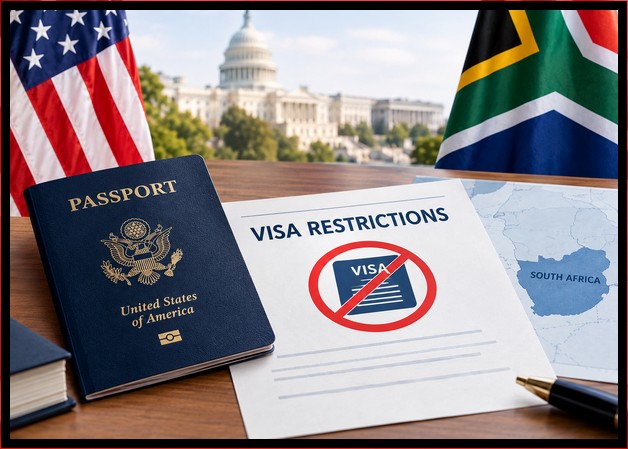
AIP Wire report, WASHINGTON D.C.—The United States has announced a new visa restriction policy targeting foreign nationals whom Washington says are responsible for or complicit in South African laws and policies involving race-based discrimination, uncompensated land seizures, or the incitement of imminent violence against minority groups.
Secretary of State Marco Rubio announced the policy on September 15 under Section 212(a)(3)(C) of the Immigration and Nationality Act.
In the statement, Rubio said the United States remains concerned about what the administration describes as racially motivated crime and government-sponsored discrimination against Afrikaners and other minority populations in South Africa.
The State Department also cited race-based legislation, threats of land expropriation without compensation, and what it described as incitement of racial violence through dehumanizing chants and slogans.
Rubio said the South African government had not adequately addressed concerns previously raised by Washington. The new policy is intended to target foreign nationals involved in the enactment or implementation of policies that meet the conditions outlined by the State Department.
The policy does not amount to a blanket visa restriction on South African nationals. It is directed at individuals whom the United States determines fall within the categories described in the announcement. Rubio did not identify specific individuals in his statement.
Section 212(a)(3)(C) gives the Secretary of State authority to determine that a foreign national is inadmissible when their entry into the United States could have potentially serious adverse foreign-policy consequences for the country.
The State Department said certain family members may also be covered by the restrictions.
The announcement follows President Donald Trump’s Executive Order 14204, titled “Addressing Egregious Actions of the Republic of South Africa.” The administration has previously raised concerns about South Africa’s land policies and its approach to racial inequality.
South Africa has rejected the U.S. characterization of its domestic policies. Its government has said that its laws are intended to address inequalities rooted in the country’s history of colonialism and apartheid and has defended its sovereign right to legislate on domestic matters.
The latest announcement adds to broader tensions between Washington and Pretoria. Reuters reported that the United States has already taken other measures affecting the relationship, while South African officials have rejected claims that white South Africans are facing systematic persecution.
The practical scope of the new visa policy remains partly unclear because the United States has not publicly identified the individuals who could be affected.
For now, the announcement establishes the categories of conduct that Washington says could lead to visa restrictions rather than imposing a general restriction on travel by South African citizens.