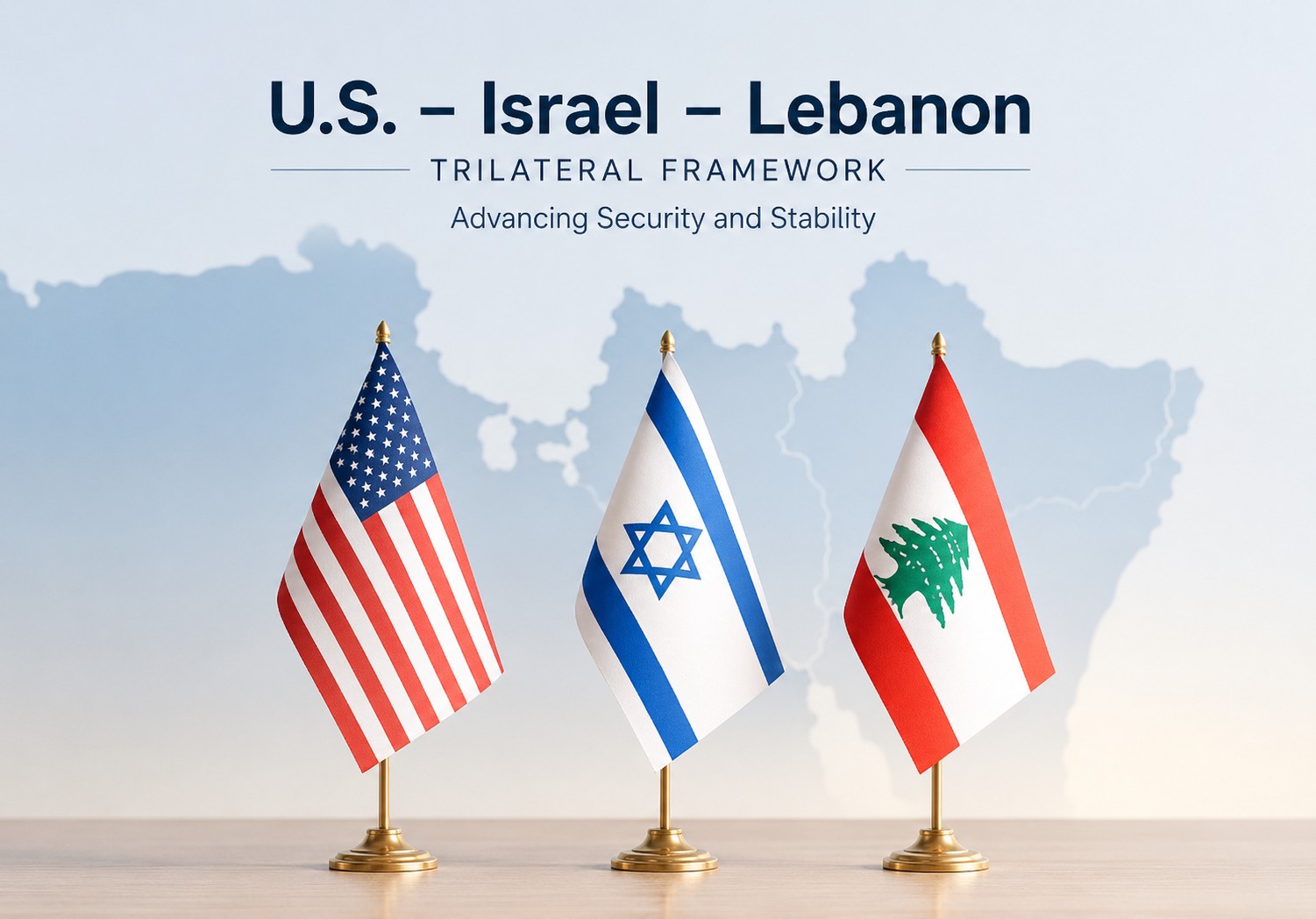
AIP Wire Report, Washington, D.C. — The United States, Israel, and Lebanon have signed a trilateral framework agreement aimed at establishing a pathway toward improved security cooperation and long-term regional stability. The framework was announced during a signing ceremony at the U.S. Department of State, where officials described the agreement as an important diplomatic step toward reducing tensions along the Israel-Lebanon border.
According to the U.S. State Department, the framework is intended to provide a structured mechanism for continued dialogue and cooperation among the three parties. While it does not constitute a final peace treaty, it lays the foundation for future negotiations on security arrangements, border-related issues, and confidence-building measures.
The agreement follows months of heightened regional tensions and renewed diplomatic efforts led by Washington. U.S. officials emphasized that sustained dialogue and coordination are essential for preventing further escalation and promoting a more stable security environment in the Eastern Mediterranean.
Political observers note that the framework reflects a broader U.S. strategy of encouraging regional partners to resolve longstanding disputes through diplomacy rather than military confrontation. For Lebanon, the agreement could strengthen the role of state institutions in maintaining security and improving international cooperation. For Israel, the framework offers an opportunity to address persistent security concerns along its northern border through an internationally supported process.
Although significant political and security challenges remain, particularly regarding the implementation of future commitments and the influence of armed non-state actors, the signing of the framework represents a rare instance of direct diplomatic engagement involving Israel and Lebanon under U.S. mediation. Analysts suggest that successful implementation will require continued political commitment from all parties and sustained international support.
If effectively implemented, the trilateral framework could contribute to reducing cross-border tensions, enhancing regional stability, and creating conditions for broader diplomatic progress in the Middle East. However, observers caution that the agreement should be viewed as an initial step rather than a comprehensive resolution of the longstanding disputes between the two neighboring countries.