Senior Correspondent, Dhaka:
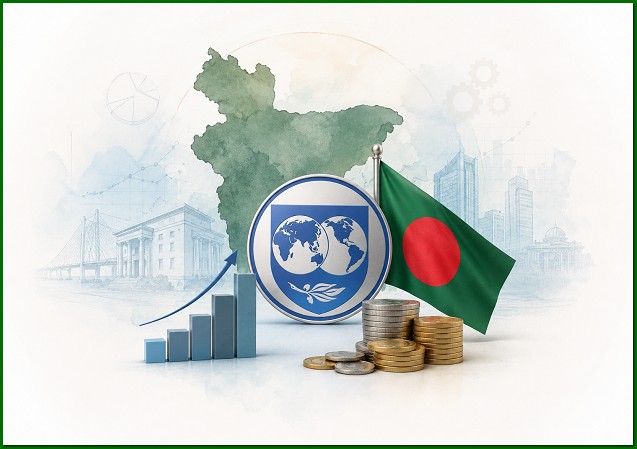
A high-level delegation from the International Monetary Fund (IMF) arrives in Dhaka for a five-day fact-finding mission that is expected to play a crucial role in determining whether Bangladesh moves towards securing a fresh loan package worth between $4 billion and $4.5 billion. While the IMF has clarified that the visit is not a loan negotiation mission, its assessment is likely to determine whether formal discussions on a new lending program begin later this year.
Led by IMF Bangladesh Mission Chief Ivo Krznar, the delegation will hold meetings with officials from the Finance Ministry, Bangladesh Bank and other government agencies to gain a first-hand understanding of the BNP government’s economic reform agenda, policy priorities and the country’s current macroeconomic situation. The discussions will focus on revenue mobilization, subsidy reforms, banking sector restructuring, exchange rate management and broader fiscal and monetary policies.
The visit comes at a critical juncture as Bangladesh seeks fresh external financing to strengthen macroeconomic stability and support its ongoing reform program. Unlike the previous IMF arrangement, which was suspended after Bangladesh failed to meet several program conditions, the government is now seeking a new facility built around its own reform priorities. The mission therefore represents an opportunity for Dhaka to demonstrate that its economic policy direction is credible and capable of meeting IMF expectations.
During the visit, the IMF delegation will review the FY2026-27 national budget, the medium-term budget framework, the Annual Development Program (ADP), major infrastructure projects and public expenditure plans. The mission will also examine revenue collection, tax policy, social safety net programs, public sector wages, subsidies for electricity, gas, fuel, fertilizer and food, as well as implementation of the Bank Resolution and Deposit Protection Act, banking sector reforms, state-owned enterprise financing, external debt management and foreign borrowing risks. A separate roundtable discussion on Bangladesh’s banking sector is also scheduled.
Government officials will present progress on adopting a market-based exchange rate, modernizing monetary policy, strengthening banking supervision and advancing climate-related reforms—areas that closely reflect recommendations made in the IMF’s latest Article IV Consultation.
The outcome of the mission is expected to shape the IMF’s internal assessment of Bangladesh’s economic outlook and reform readiness. If the delegation concludes that the government’s reform agenda is realistic and implementation capacity is strong, formal negotiations on a new loan program could begin after the IMF-World Bank Annual Meetings in October. A favorable assessment would not only improve Bangladesh’s prospects for fresh IMF financing but also strengthen international investor confidence and reinforce the country’s macroeconomic stability at a time of continued global economic uncertainty.