Staff Correspondent, Dhaka:
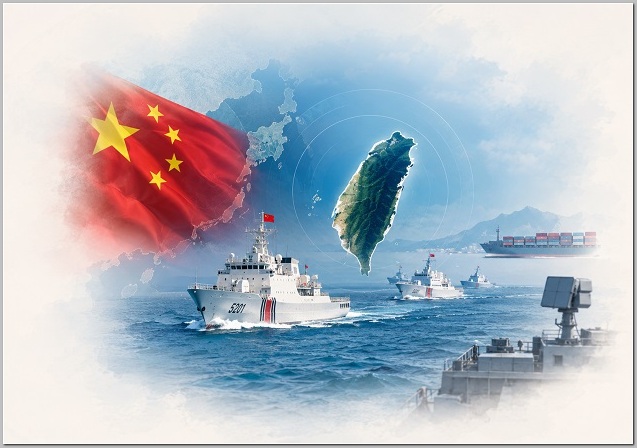
China is intensifying diplomatic pressure and maritime operations around Taiwan, combining efforts to isolate Taipei internationally with activities designed to demonstrate Beijing’s claimed jurisdiction over the island and surrounding waters.
The campaign, according to regional analysts, reflects a broader strategy of increasing pressure without triggering an outright military confrontation. These activities, commonly described as “grey zone” tactics, involve coercive measures below the threshold of open warfare.
Beijing recently imposed sanctions on Paraguay’s communications minister and Belize’s foreign minister following their visits to Taiwan. China also warned the 12 countries maintaining formal diplomatic relations with Taipei against supporting what it describes as Taiwanese independence.
The pressure has extended beyond diplomacy. In April, Seychelles, Mauritius, and Madagascar reportedly denied airspace access to a flight carrying Taiwanese President Lai Ching-te to Eswatini, forcing the cancellation of his planned visit. Lai subsequently travelled to the African kingdom the following month.
At sea, China has expanded coastguard and government-vessel operations east of Taiwan. A maritime law enforcement and hydrographic survey operation launched in June included remote inspections of ships, raising concerns in Taipei about Beijing’s efforts to normalize its presence in waters surrounding the island.
Analysts say the involvement of multiple Chinese agencies suggests a more systematic approach to challenging Taiwan’s effective control and influencing international perceptions of sovereignty.
The diplomatic campaign also carries wider geopolitical implications. Beijing has reportedly pressed European countries over visas for Taiwanese officials, while Kenya faced criticism from Taipei after restricting Taiwanese passport holders’ participation in an international ocean conference.
Taiwan has also become a source of tension between China and Japan. Japanese Prime Minister Sanae Takaichi’s remarks suggesting a Taiwan conflict could threaten Japan’s survival prompted strong Chinese objections and export restrictions affecting Japanese manufacturing.
The developments highlight the challenge facing countries seeking to preserve stability across the Taiwan Strait. While Beijing maintains that Taiwan is part of China, Taipei rejects its sovereignty claims.
The central risk is that sustained pressure, even without direct conflict, could gradually constrain Taiwan’s international engagement and increase the possibility of miscalculation in an already sensitive regional security environment.