Senior Correspondent, Dhaka:
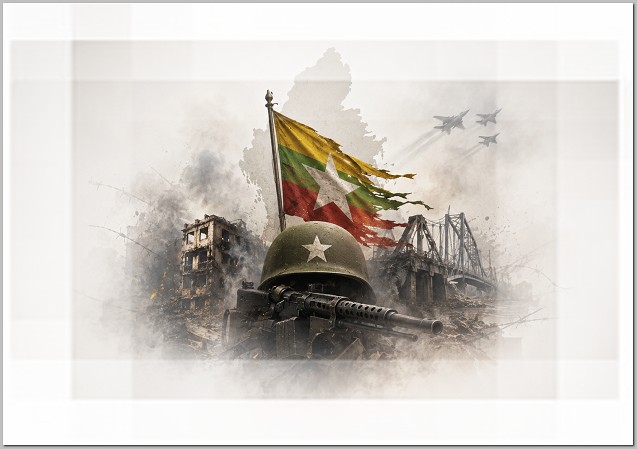
ASEAN has once again reaffirmed that its Five-Point Consensus (5PC) remains the cornerstone of regional efforts to address Myanmar’s prolonged political and humanitarian crisis. However, despite renewed diplomatic engagement, the bloc continues to face the difficult challenge of translating consensus into concrete progress amid persistent violence and resistance from Myanmar’s military authorities.
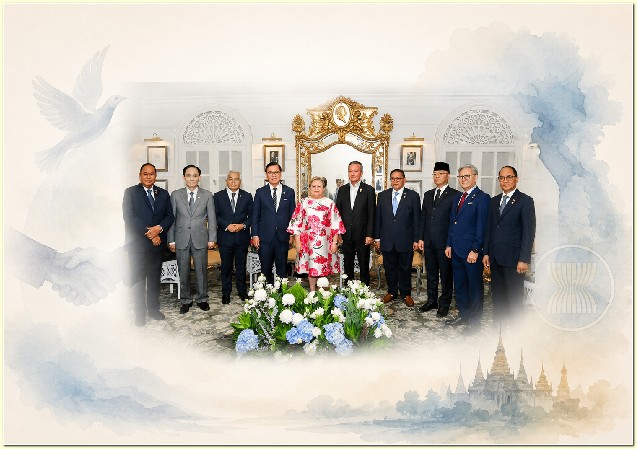
During an informal meeting of ASEAN foreign ministers in Thailand, Philippine Secretary for Foreign Affairs Maria Theresa Lazaro, who serves as the ASEAN Chair’s Special Envoy on Myanmar, stressed that the 5PC remains the only agreed regional framework for engagement with all stakeholders, including Myanmar’s military-led government. Her remarks came just days after Myanmar’s parliament rejected the peace plan, highlighting the widening gap between ASEAN’s diplomatic objectives and Naypyidaw’s political stance.
The renewed emphasis on humanitarian assistance, violence reduction, and inclusive political dialogue reflects ASEAN’s recognition that the crisis cannot be resolved through political isolation alone. The bloc’s proposal to expand humanitarian aid demonstrates a pragmatic approach aimed at addressing the immediate needs of civilians while maintaining channels of communication with the authorities.
At the same time, ASEAN’s call for an inclusive political process, including the release of political prisoners, signals growing concern that any future stability will require broader participation beyond the military administration. The emphasis on creating a conducive political environment also suggests that ASEAN is attempting to balance respect for member-state sovereignty with increasing international expectations for meaningful action.
Thailand’s support for “calibrated engagement” further illustrates ASEAN’s evolving strategy. Rather than abandoning dialogue after repeated setbacks, the bloc is seeking reciprocal commitments from Myanmar while keeping diplomatic pressure alive. Bangkok’s position indicates that ASEAN increasingly views engagement as conditional rather than unconditional.
Nevertheless, significant obstacles remain. Myanmar’s rejection of the 5PC demonstrates the limited leverage ASEAN possesses without stronger enforcement mechanisms. The absence of a formal implementation timeline also raises questions about the bloc’s ability to hold Myanmar accountable.
The upcoming ASEAN Summit is therefore expected to become an important benchmark for evaluating whether recent diplomatic efforts have produced measurable progress. Unless Myanmar responds with tangible steps toward reducing violence and advancing political reconciliation, ASEAN risks seeing its flagship peace initiative remain more aspirational than effective, underscoring the enduring limitations of consensus-based regional diplomacy.