AIP Wire Report: New York.
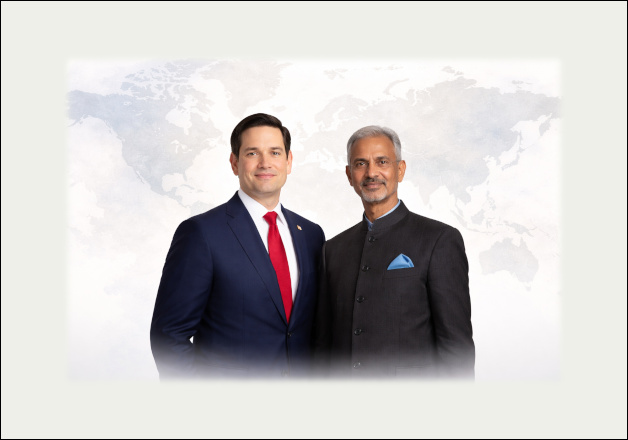
A brief diplomatic readout issued on March 23, 2026, following a call between U.S. Secretary of State Marco Rubio and India’s External Affairs Minister Subrahmanyam Jaishankar may appear routine on the surface. Yet, its timing and language suggest a more deliberate alignment between Washington and New Delhi on the evolving situation in the Middle East.
The official statement, released by the State Department, offered few specifics, noting only that both sides discussed regional developments and agreed on the importance of continuing cooperation to advance mutual priorities. Such restrained language is typical of high-level diplomatic engagements where sensitivity outweighs disclosure. However, what is left unsaid often carries as much weight as what is publicly acknowledged.
The Middle East remains a region of persistent volatility, where shifting alliances, security concerns, and economic interests intersect. For the United States, engagement with trusted partners is a central pillar of its approach to managing regional instability. India, increasingly positioned as a global actor with strategic autonomy, occupies a unique role in this equation.
Unlike many U.S. allies, India maintains relationships across a broad spectrum of Middle Eastern states, balancing ties with competing actors while safeguarding its own interests. Its deep energy dependence on the region, along with the presence of a large Indian diaspora, ensures that developments there have immediate domestic implications. This makes New Delhi not just a stakeholder, but a potentially influential interlocutor.
The call between Rubio and Jaishankar, therefore, can be read as part of a broader pattern of quiet coordination rather than a one-off exchange. It reflects a recognition in Washington that India’s regional posture—grounded in pragmatism and non-alignment—can complement U.S. efforts without being subsumed by them.
Equally, for India, such engagement reinforces its growing role in global diplomacy. By participating in discussions on complex geopolitical issues beyond its immediate neighborhood, New Delhi continues to signal that it is not merely reacting to global developments but helping shape them.
The absence of detailed disclosures in the readout may indicate that discussions touched on sensitive or still-evolving dynamics. In such contexts, diplomatic caution serves a purpose: preserving flexibility while maintaining a visible line of communication.
Ultimately, the significance of the Rubio–Jaishankar call lies less in its immediate content and more in what it represents—a steady, if understated, convergence of interests between two major democracies navigating an increasingly uncertain global landscape.