Sadik Sagar, Dhaka.
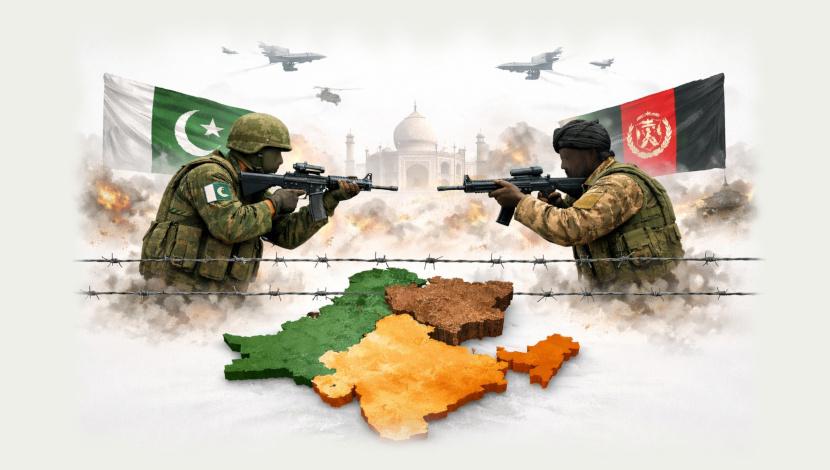
Tensions in South Asia have sharply intensified following Pakistan’s declaration of what it described as an “open war” posture toward Afghanistan, marking one of the most serious downturns in relations between the two neighbours in recent years.
The statement from authorities in Pakistan came amid growing cross-border security concerns, with Islamabad accusing militant groups of using Afghan territory to stage attacks inside Pakistan. Officials in Afghanistan have rejected the allegations, warning that escalating rhetoric could further destabilize an already fragile region.
Relations between the two countries have remained strained since the return of the Taliban to power in Kabul in 2021. Pakistan has repeatedly called on Afghan authorities to take decisive action against armed groups it claims operate from border areas. Kabul, in turn, has accused Pakistan of violating its sovereignty through cross-border strikes and security operations.
The development also carries implications for regional geopolitics, particularly involving India, Pakistan’s longstanding rival. Although New Delhi has not been directly involved in the current tensions, analysts say any deterioration in Pakistan’s western frontier security could affect the broader strategic balance in South Asia. India has historically maintained a complex relationship with Afghanistan and has invested in infrastructure and development projects there. Heightened instability could influence India’s regional security calculations and diplomatic posture.
Security experts caution that if cross-border hostilities escalate, they could create strategic pressures for Pakistan on two fronts—its eastern border with India and its western border with Afghanistan. While there is no immediate indication of military movement involving India, observers note that shifting alignments and security concerns could indirectly reshape regional dynamics.
Meanwhile, increased troop deployments, sporadic clashes, and temporary border closures between Pakistan and Afghanistan have disrupted trade and affected civilian populations on both sides. Prolonged instability could hamper regional connectivity initiatives and undermine counterterrorism cooperation efforts.
Despite the sharp rhetoric, analysts believe a full-scale conventional war remains unlikely due to economic constraints and geopolitical sensitivities. However, the risk of miscalculation, limited cross-border engagements, and diplomatic fallout remains significant.
As tensions continue to mount, regional stability may depend on whether diplomatic channels among key South Asian stakeholders can be activated swiftly to prevent further deterioration and contain the crisis within manageable limits.