By Sadik Sagar, Dhaka.
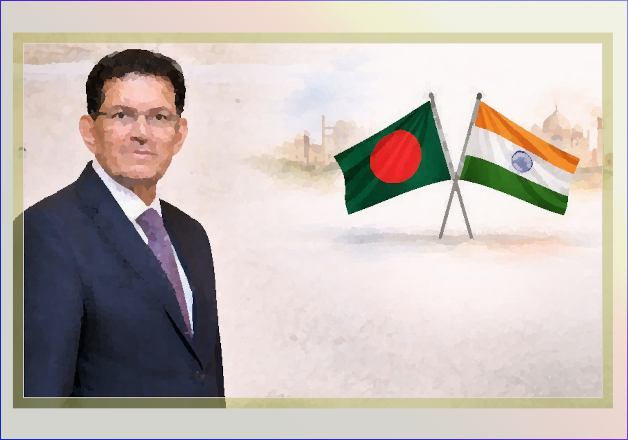
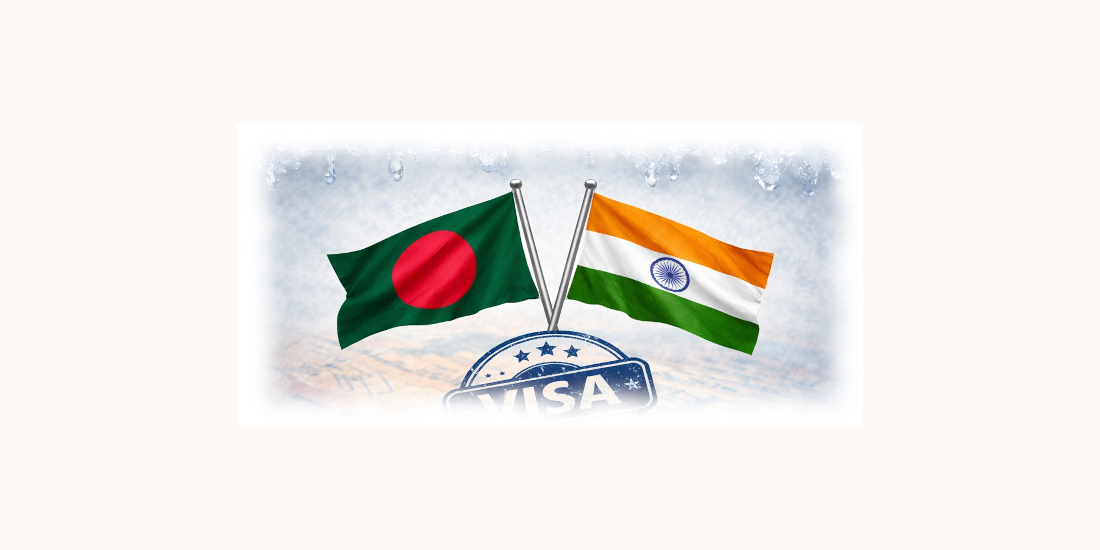
In a significant diplomatic development, Bangladesh’s missions in India have resumed visa services on a limited scale, marking what observers see as an early confidence-building measure between Dhaka and New Delhi after months of strained relations.
The resumption, which began Friday, comes days after the BNP-led government assumed office on February 17 following its landslide electoral victory. Diplomatic sources in New Delhi confirmed that visas of all categories are being issued on a restricted basis, with plans to expand services from next week. The move mirrors recent gestures from the Indian side, including steps to gradually restore visa processing for Bangladeshis.
Bilateral ties had sharply deteriorated after the ouster of the Awami League government on August 5, 2024, and the subsequent departure of former prime minister Sheikh Hasina to New Delhi. India imposed restrictions on travel visas for Bangladeshis and tightened certain trade measures, prompting reciprocal actions from Dhaka. Visa operations were further disrupted in December amid protests outside Bangladeshi missions in cities including New Delhi, Kolkata, Mumbai, Guwahati and Agartala.
Recent high-level exchanges appear to have softened the diplomatic climate. Indian External Affairs Minister S. Jaishankar visited Dhaka on December 31 to attend the funeral of former prime minister Khaleda Zia. Subsequently, Prime Minister Narendra Modi congratulated his Bangladeshi counterpart Tarique Rahman, with the message formally conveyed during the new cabinet’s oath-taking ceremony.
On February 18, India’s Assistant High Commissioner in Sylhet, Aniruddha Das, announced that medical and double-entry visas were already being processed, with tourist and other categories to follow gradually. In parallel, the Bangladesh High Commission in New Delhi has begun receiving tourist visa applications from Indian nationals after lifting a two-month suspension.
The economic implications are considerable. According to India’s Bureau of Immigration, 2.12 million Bangladeshi tourists visited India in 2023, a figure that fell sharply following last year’s political upheaval. Medical travel, business visits and cross-border trade have all been affected.
Diplomats on both sides describe the visa thaw as a reciprocal, calibrated step rather than a full normalisation. Yet the symbolism is unmistakable. By reopening consular channels, Dhaka and New Delhi are signalling a willingness to stabilise ties and prevent political transitions from permanently unsettling one of South Asia’s most consequential bilateral relationships.